
When travellers begin researching the best holiday destinations in France, they often picture the elegance of Paris or the glamour of the Riviera. Yet those who look towards southwest France discover something quieter and far more grounding. Dordogne, located in the historic Périgord region, offers a French countryside escape shaped by medieval villages, riverside beauty, and deeply rooted traditions.
A French Countryside Escape That Feels Untouched
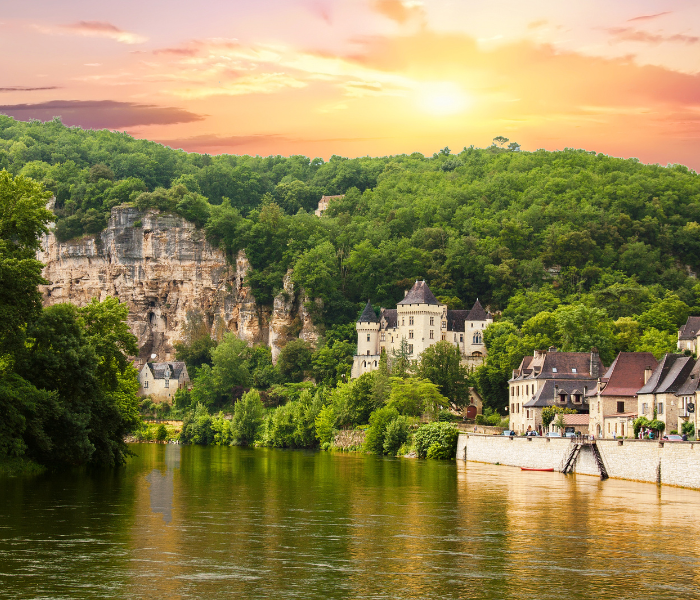
Dordogne travel is defined by space and scenery. Limestone cliffs rise above the Dordogne and Vézère rivers, sunflower fields stretch across rolling hills, and honey-coloured stone houses glow warmly in the evening light. This is rural France at its most authentic, where the landscape itself feels like part of the experience.
Unlike busier destinations, Dordogne encourages you to slow your pace. Morning walks are accompanied by birdsong rather than traffic. Afternoons drift between market browsing and long lunches under shaded terraces. It is the kind of place where time feels generous.

Understanding the Four Regions of Périgord
Dordogne is traditionally divided into four distinct areas, each offering its own atmosphere and landscape. Knowing the differences helps travellers shape the kind of holiday they want.
Périgord Vert – The Green North
In the north lies Périgord Vert, known for its rolling countryside, forests and peaceful market towns. This area feels particularly unspoilt and is ideal for walkers, cyclists and anyone seeking rural calm. Brantôme, often called the Venice of Périgord, captures this spirit beautifully with its riverside setting and relaxed rhythm.
North Dordogne is perfect for those wanting space, nature and authenticity away from heavy tourist traffic.
Périgord Blanc – Around Périgueux
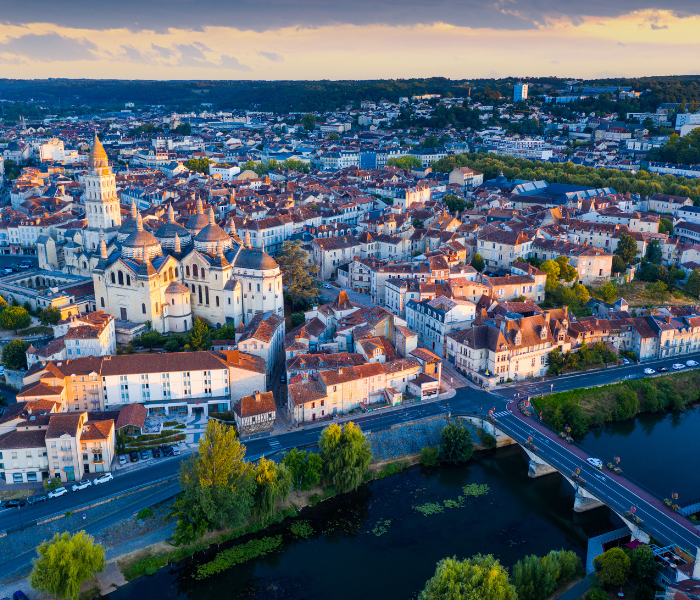
At the centre of the department sits Périgord Blanc, named after its pale limestone terrain. The capital, Périgueux, blends Roman heritage with elegant architecture and lively café culture. Its cathedral dominates the skyline, while the historic streets offer shops, restaurants and cultural interest.
This region offers a balance between countryside tranquillity and small-city comfort.
Périgord Pourpre – Vineyards and Bergerac
To the south lies Périgord Pourpre, shaped by vineyards and the gentle flow of the Dordogne River. Bergerac anchors this region with its half-timbered buildings, riverside walks and strong wine heritage.
Wine tastings, vineyard tours and open landscapes make this part of Dordogne particularly appealing for relaxed exploration.
Périgord Noir – Medieval Drama
In the southeast, Périgord Noir is perhaps the most recognised area. Here you will find Sarlat, Beynac and La Roque-Gageac, alongside dramatic château views and dense oak forests that give the region its name.
Prehistoric caves, fortified villages and Renaissance manors sit within a landscape that feels cinematic yet deeply rooted in history.

Local Gastronomy and Market Life
A southwest France holiday would be incomplete without food, and Dordogne’s local gastronomy is central to its appeal. Weekly markets brim with walnuts, truffles, duck confit, goat cheese, strawberries, and freshly baked bread. Restaurants showcase regional flavours while small village cafés offer simple, satisfying dishes made from local produce.
Eating well in Dordogne is not an event reserved for special occasions. It is part of everyday life. Sharing a relaxed meal on a village square, watching the world drift by, often becomes one of the most memorable moments of any stay.
Ideal for Families and Slow Travellers
Dordogne is particularly well-suited to families seeking a relaxed and enriching holiday in France. River canoeing along calm stretches of water, cycling through green valleys, and exploring castle ruins provide outdoor adventure without intensity. The region feels safe, welcoming, and refreshingly unhurried.
Couples and slow travellers are equally drawn to its rhythm. Vineyard visits, scenic drives through the Périgord, and evenings spent watching sunset light over stone rooftops create a sense of quiet contentment. This is a destination that rewards lingering.
Where to Stay in Dordogne
Accommodation reflects the region’s character. Visitors can choose boutique hotels within medieval town centres, countryside gites and farm stays, restored manor houses, or château stays surrounded by parkland. Many properties feature swimming pools, shaded gardens, and panoramic views, making them ideal during the warmer months.
Spring and early autumn offer particularly pleasant conditions for a Dordogne holiday, with mild temperatures and fewer crowds. Booking in advance during peak summer ensures access to smaller, character-filled properties that define the region’s charm.
A Destination That Invites You Back
What makes Dordogne stand out is not spectacle but sincerity. It offers genuine French culture without performance, beauty without excess, and history without overwhelm. Visitors often leave feeling rested rather than rushed.
For travellers seeking a meaningful southwest France holiday rooted in heritage, nature, and simple pleasures, Dordogne delivers depth and authenticity. It may not shout for attention, yet it consistently leaves a lasting impression. And more often than not, it becomes a place people return to, year after year, drawn back by its calm landscapes and enduring charm.