
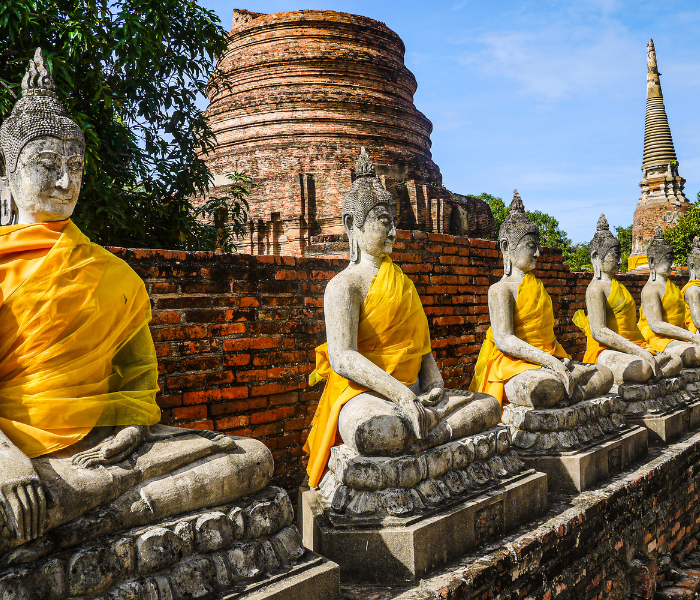
Thailand has ancient temples, white-sand islands, some of the best food on the planet, and prices that make the rest of Southeast Asia look expensive. Whether you are planning a family holiday, a solo backpacking loop, or a longer stay as one of the growing number of digital nomads, this Thailand travel guide covers everything you need to get organised before you go.
Here are the most useful Thailand travel tips so you can spend less time googling and more time looking forward to your trip. Read on for everything from Thailand travel basics to food, money, and safety.
Best Time to Visit Thailand
Thailand is warm year-round, but when you go matters. The cool, dry season from November to February is the most popular window. Temperatures sit around 25 to 32 degrees Celsius, humidity is lower, and rain is rare. This is peak season, so expect higher accommodation prices and busier tourist areas.
March to May is the hot weather stretch. Temperatures climb past 35 degrees in Bangkok, and even the beaches feel heavy.
The rainy season runs roughly from June to October. Rain usually comes in short, heavy bursts rather than all-day downpours, and you will find cheaper accommodation prices, fewer crowds, and greener scenery across the national parks. If you can be flexible with island hopping plans, the rainy season is a smart time to visit Thailand on a tighter budget.
How to Enter Thailand
UK passport holders can enter Thailand without a visa for stays of up to 60 days. You will need a passport valid for at least six months and proof of onward travel. Check the latest entry requirements on the UK government travel advice for Thailand before you book.
If you plan to stay longer, a tourist visa from the Thai embassy in London gives you 60 days with the option to extend for another 30 days locally. The process to enter Thailand is straightforward, but make sure your paperwork is in order. Overstaying carries strict laws and penalties, including fines and potential bans from re-entry.
For those coming overland from elsewhere in Southeast Asia, land border crossings into Thailand are common and hassle-free.
Getting Around Thailand
Tuk-tuks are everywhere in Bangkok and Chiang Mai. Always agree on a fare before you get in. Tuk-tuk drivers in tourist areas often quote high prices, so negotiate first. A short tuk-tuk ride in Bangkok should cost around 50-100 Thai baht.
Motorcycle taxis are identified by their orange vests. A motorcycle taxi ride across a few blocks costs as little as 20 Thai baht. Grab (the Southeast Asia ride-hailing app) is a good alternative if you prefer fixed prices.
Domestic flights between major cities are affordable. Budget airlines like AirAsia and Nok Air connect Bangkok to Chiang Mai, Koh Samui, Phuket, and Krabi for low fares if you book early. For island hopping, a combination of buses and ferries is the standard approach. Joint tickets are sold at every travel agent in tourist areas.
Trains run north to Chiang Mai and south towards the coast. They are slow but scenic, and sleeper carriages save you a night’s accommodation.
Where to Go in Thailand
Bangkok
Start with the Grand Palace, the former royal residence and home to the sacred Emerald Buddha. Dress codes are strictly enforced. The Grand Palace sits next to Wat Pho, one of the oldest temples in the city, home to a 46-metre reclining Buddha. Wat Pho is also the birthplace of traditional Thai massage.
Walk to Khao San Road, the backpacker hub of Bangkok, lined with street food stalls, bars, and shops selling elephant pants. Khao San Road is not everyone’s cup of tea, but it is worth seeing once. For a calmer evening, explore a night market like Chatuchak.
Bangkok also makes a good base for a day trip to the floating markets or the ancient temples at Ayutthaya.
Chiang Mai
Chiang Mai is the cultural heart of northern Thailand and a favourite with solo travellers, families, and digital nomads. It is smaller, cooler, and greener than Bangkok, with over 300 temples inside the old walled city.
Cooking classes are hugely popular in Chiang Mai. You visit a local market, then spend half a day learning to make pad thai, tom yum, papaya salad, and other Thai food staples. Several cooking classes also include a farm visit. Expect to pay around 800-1,200 Thai baht.
Just outside the city, Elephant Nature Park is an ethical rescue and rehabilitation centre. Unlike some tourist operations, Elephant Nature Park does not offer rides. Instead, you walk with the elephants and learn about conservation. It is a full-day trip and books up fast.
Chiang Mai’s night market runs every evening, and the Sunday Walking Street market is even bigger. Street food here is excellent. A plate of sticky rice with grilled pork costs around 40 Thai baht.
Chiang Mai is also the starting point for treks into the hills of northern Thailand. The national parks surrounding the city, including Doi Inthanon, make for brilliant day trips.
Thai Islands and Island Hopping
Thailand’s islands are the main draw for many travellers, and island hopping is the best way to see them.
Koh Samui is the largest and most developed island in the Gulf. Koh Samui has proper infrastructure, a range of accommodation from budget hotels to luxury resorts, and its own airport. Families often base themselves on Koh Samui because of the good hospitals, paved roads, and calmer beaches. A day trip from Koh Samui to Ang Thong National Marine Park is one of the best things you can do in the Gulf.
Koh Tao is a short ferry ride from Koh Samui and is famous for diving. If you want your PADI certification, Koh Tao is one of the cheapest places in the world to do it. The island is small enough to explore by motorcycle taxi in a day.
The Full Moon Party on Koh Phangan draws thousands every month. The full moon party is an all-night beach rave with fire shows and bucket drinks. If you plan to attend a moon party, book accommodation well in advance. Prices double around moon party dates, and ferries fill up. It is a rite of passage for backpackers in Southeast Asia.
For island hopping on the Andaman side, Krabi, Koh Lanta, and the Phi Phi Islands are the main stops. You can arrange island-hopping packages through any travel agent. Budget a few days for island hopping to avoid rushing between beaches.
Khao Sok National Park
Khao Sok National Park is one of the most underrated spots in the country. It is home to ancient rainforest, limestone karsts, and Cheow Lan Lake, where you can sleep in floating bungalows. Khao Sok is a brilliant break from the beaches and one of the best national parks in Southeast Asia.
Thai Food You Need to Try
Thai food is fresh, bold, and almost absurdly cheap. Street food stalls are everywhere, from Bangkok’s backstreets to quiet villages in northern Thailand.
Pad Thai tastes completely different when it is made in front of you for 50 Thai baht. Tom yum soup is on every menu. Papaya salad is a staple of street food carts across the country, and sticky rice appears alongside almost everything in the north. If you can handle spicy food, ask for “pet mak” (very spicy). The amazing Thai food you find here makes the stuff back home seem like a pale imitation.
Try dishes that are not always on tourist menus. Khao soi, a coconut curry noodle soup, is a Chiang Mai classic. Street food is generally safe to eat. Look for stalls with high turnover and where locals are queuing. Wash it down with a local beer (Chang, Singha, or Leo) for around 60 Thai baht.
Thailand Travel Tips
These travel tips will save you time, money, and hassle on your Thailand travel plans.
Money and Costs
The currency is the Thai baht. One British pound buys roughly 43-45 Thai baht. ATMs charge a 220 Thai baht fee per withdrawal, so take out larger amounts.
Thailand is good value. Street food costs 40 to 80 Thai baht per meal. A budget hotel runs 400 to 800 Thai baht a night. Mid-range hotels sit around 1,500 to 3,000 Thai baht. Accommodation prices vary by location. Koh Samui and Phuket are pricier than Chiang Mai or Chiang Rai. One of the best Thailand travel tips for saving money is to visit Thailand during the shoulder months and stick to the less touristy islands.
Health and Safety
Talk to your GP about vaccinations before you travel. Mosquito-borne illnesses are a health risk, particularly during the rainy season, so pack a DEET-based repellent.
Do not drink the tap water. Bottled water is cheap and available everywhere. Tap water is also best avoided for brushing teeth in rural areas.
Travel insurance is non-negotiable. A serious accident or illness can run into thousands of pounds. Make sure your travel insurance covers motorcycle use if you plan to rent a scooter. Check your travel insurance also covers adventure activities like diving on Koh Tao.
Thailand has strict laws around drugs, with severe penalties including long prison sentences.
What to Wear
Light, breathable clothing works best. For temples and the Grand Palace, you need covered shoulders and knees. Many tourists buy the colourful elephant pants sold on Khao San Road. They are cheap, comfortable, and do the job. A light rain jacket is useful during the rainy season. This is one of those travel tips that sounds obvious until you are caught out.
Staying Connected
Free Wi-Fi is common in hotels and tourist areas, but patchy on the islands and unreliable in national parks. If you want consistent internet for maps, translation apps, and booking tuk-tuks or motorcycle taxis on the go, an eSIM is the way forward.
Picking up a travel eSIM for Thailand from Roambit before you leave means you will have maps, translations, and ride-hailing apps ready from the moment you land. No queuing at the airport. It is especially handy for island hopping between Koh Samui, Koh Tao, and the mainland.
Local Advice
Thai culture places a high value on respect and politeness. Remove your shoes before entering temples or someone’s home, and avoid pointing your feet at people or Buddha images.
Haggling is expected at markets and with tuk-tuk drivers, but keep it friendly. In tourist areas, prices are often inflated. If a tuk-tuk driver offers a “free tour” that includes a gem shop or a suit tailor, politely decline.
Solo travellers, including solo female travellers, generally find Thailand very welcoming. The backpacker trail is well-established, hostels are sociable, and tourist areas are safe at night in most places. Common-sense precautions apply, as they would anywhere you travel.
Digital nomads have turned Chiang Mai into one of the top remote-work hubs in Southeast Asia. Co-working spaces, fast internet, and amazing Thai food make it easy to see why. Koh Samui and Bangkok also have growing digital nomad communities.
Final Thoughts
Thailand is one of the easiest countries in Southeast Asia to travel around, whether it is your first big trip or your tenth. The food is brilliant, the people are friendly, and your money stretches a long way. Get your travel insurance sorted, pack light, and you will have a fantastic time. Hopefully, these travel tips help you plan the perfect Thailand travel itinerary.