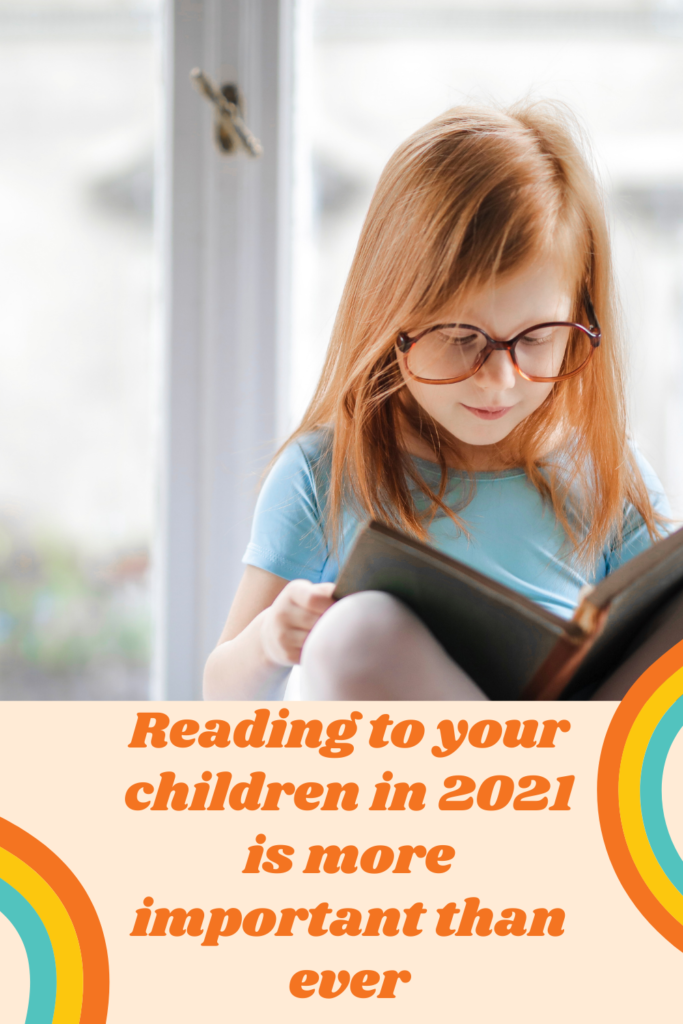
Reading to your children in 2021 is more important than ever
Reading to children and encouraging them to read has always been important. As we enter 2021 with more lockdowns ahead of us, it has arguably become more important than ever before.
The UK’s education watchdog, Ofstead, published a report in November warning that children in England suffered a significant regression in their development as a result of school closures as part of Covid restrictions. The report revealed that some potty-trained children had regressed back to nappies, vocabulary and numeracy skills had dropped and some had even forgotten how to use a knife and fork. There was also a warning that older children had lost “stamina” for reading. Meanwhile, research conducted by social enterprise Teach First found that children in poorer families in England and Wales were disproportionately affected by school closures because they did not have access to the technology required to learn online at home.
Reading has always been vitally important of a child’s development as they grow and prepare for school life. While many parents have struggled to cope with the pressure of being parent and teacher throughout the pandemic, this is no time to take the foot off the reading pedal. It’s important to view it as something to enjoy, quality time with your child, and not another activity to fill the lockdown days.
To help you on your reading journey in 2021, have a look at these tips.
Create a routine
Children need to read regularly in order to really reap the benefits, it should be done at least once a day. Given that children spend the majority of their days in school or nursery, parents often opt to integrate reading with their child’s bedtime routine, which is absolutely fine. However, fresh lockdowns in the UK offer the opportunity to increase the amount of time spent reading in the daytime. When things go back to ‘normal’ you’re both likely to miss that time together, and will perhaps opt for a book instead of the TV or tablet when everyone gets home.
Don’t beat yourself up if you’re forced to miss a day or a session, just try to read as often as possible.
‘One more time’
Choosing which story to read is a balancing act. Reading a variety of different books is important to a child’s development, but so is repetition, especially as you look for books for 2 year olds. Reading a particular story over and over again can become tiresome very quickly for the parent, but toddlers, in particular, learn through repetition. So reading one story six or seven times, while boring for you, will have a better impact on their development than reading it twice, for example.
Create a reading space
If you can, try to create a reading space, somewhere you and your child can go, both knowing that it’s time to slow down, to spend time together, to read and have fun. If you read at bedtime, try to use something to make it unique to reading time, a special chair for you to sit on while your little one gets tucked up in bed, perhaps.
There are plenty of unique and wonderful ways to create a reading corner, from tents through to specific ‘zones.’ Some children (and parents!) need to be free of distractions to really immerse themselves in reading time and teepees provide that excellent, cosy environment.
If you’ve got more than one child…
If you’ve got more than one child, try to spend time alone with each of them to help build a stronger relationship between the two of you and support their own development (especially if they are more than two years apart!). Different children have different interests and different needs.
It’s not the end of the world if you can’t though. Reading is always better than not reading. Depending on the age gap, the older child will likely love the idea of revisiting some of their old favourites or reading their own books to their younger sibling.
Engage, engage, engage
Reading should be an engaging experience for everyone involved. When reading with toddlers, remember to point to pictures and ask them to point out things. Ask them questions about the story and encourage them to ask their own questions.
You may not rate your acting skills very highly, but putting on different voices and emphasising the emotions involved will help your little one to differentiate characters and understand what is happening. Some books help to identify how it should be read, with spacing, different fonts and sizing. And if you’re reading to an older child, who is perhaps starting to learn to read themselves, try to follow the words with your finger to help build their association with the written and spoken words.
There really is no activity like reading. It develops so many skills while allowing the imagination to run wild, and all while helping to solidify a relationship between parent and child. You won’t regret reading to your child more in 2021.
Take a look at my post on free resources for home schooling too