
Your bedroom should be more than just a place to sleep. It’s your personal retreat from the world, yet most of us are getting 90 minutes less sleep than people did 100 years ago. Could your bedroom environment be the missing piece to reclaiming those precious hours of rest?
Here’s something that might surprise you: people with cluttered bedrooms take longer to fall asleep. When chaos surrounds your sleeping space, it creates chaos in your mind – and that’s hardly the recipe for peaceful slumber. Sleep experts recommend between seven and nine hours of quality rest each night for your body to properly recharge.
Creating a calming bedroom isn’t just about making things look pretty. The colours you choose have a profound influence on the ambience of your space, affecting both your ability to unwind and the quality of your sleep. From soothing colour palettes to relaxing bedroom decor that speaks to your senses, there are simple yet effective ways to make your sleeping space work harder for your wellbeing.
Ready to discover how to create a bedroom that supports both restful sleep and mindful living? Let’s explore the practical steps that will help you build the peaceful sanctuary you deserve.
Design a Relaxing Bedroom Sanctuary
Your bedroom sanctuary starts with smart design choices that work as hard as you do. Studies show that optimising your bedroom environment leads to better rest, so every decision you make about your space matters.
Pick a calming colour palette
The colours surrounding you while you sleep have a profound impact on your ability to relax. Poor sleep quality can lead to a 15% decrease in life expectancy, making your bedroom’s colour scheme more important than you might think.
Here are the scientifically-backed colour choices that really work:
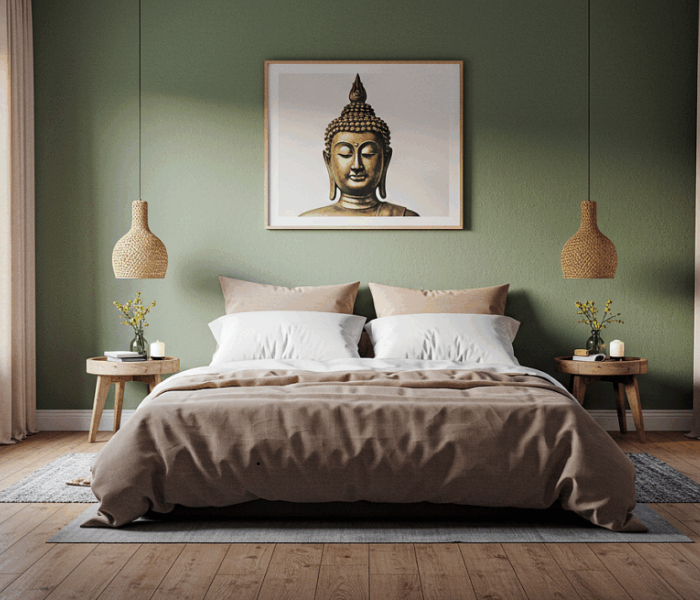
- Soft blues and greens that mimic natural environments and potentially lower heart rate
- Warm neutrals like beige, cream, and soft stone that feel grounded and timeless
- Muted pinks and purples that create a cocooning effect
For the most soothing effect, limit yourself to three main colours. Why not try the split wall technique? Paint deeper shades on the lower third for a grounded feel or on the upper third for a cosy, intimate atmosphere.
Use soft furnishings and natural textures
Materials influence how you engage with your bedroom both sensorially and energetically. Natural textures like handwoven jute, hemp, linen, cotton, solid wood and glass allow you to connect with your space in a way synthetic materials simply cannot.
Choose bedding, curtains and upholstery made from breathable natural fabrics. Then, layer different textures with:
- A knitted blanket at the foot of the bed
- A soft, luxurious rug underfoot
- Cushions in varied materials like velvet or boucle
These varied textures create visual interest while contributing to the relaxing atmosphere.
Add plants for a touch of nature
Bringing greenery into your bedroom offers both aesthetic and health benefits. Plants work on our physical health by producing oxygen while filtering pollution and absorbing dust. Studies show that house plants can reduce stress levels and improve mood, creating a restful atmosphere conducive to sleep.
For bedroom plants, consider snake plants, which unlike most plants release oxygen at night rather than during the day. Alternatively, peace lilies offer wonderful air-purifying qualities and help humidify the air around you.
Don’t forget that combining mindful colour choices, natural textures, and living plants will help you create a bedroom sanctuary that nurtures both body and mind.

Creating a Comfortable Sleep Environment
Pretty colours and soft textures can only take you so far. Your body needs proper support and the right environmental conditions to achieve the deep, restorative sleep that leaves you feeling refreshed.
What makes the perfect sleep foundation?
Your mattress choice can make or break your sleep quality. Studies show that a medium-firm mattress works best for most people seeking improved sleep quality. Side sleepers, however, might find softer foam mattresses provide better pressure relief.
Don’t overlook your pillow – you’ll spend roughly 2,400 hours each year with your head resting on it. The key is maintaining “neutral head alignment,” keeping your head neither too far back nor forward. Consider your sleeping style:
- Side sleepers: Choose firmer, fuller pillows with thicker edges to bridge the gap between ear and shoulder
- Back sleepers: Select thinner pillows, preferably thicker at the bottom to cradle your neck
- Stomach sleepers: Use the thinnest pillows possible to prevent neck strain
Why does bedding matter?
High-quality bedding can significantly enhance your sleep environment. Natural fibres like cotton and linen help regulate temperature throughout the night, whilst breathable sheets create better airflow to prevent overheating.
Time to replace bedding that shows visible signs of wear, such as thinning or yellowing. Egyptian cotton offers that luxurious hotel feel, although a poly-cotton blend might be more budget-friendly and easier to maintain.
Keep things cool and quiet
Temperature dramatically affects your sleep quality. Sleep experts recommend keeping your bedroom between 15-19°C. This temperature range helps facilitate REM sleep stability. Sleep in a room warmer than 21°C and you’ll likely disrupt your sleep cycle, causing you to wake throughout the night.
Takeaway Tip: Soft fabrics like curtains and rugs absorb unwanted sounds. Some modern blinds feature sound barrier technology to reduce noise vibrations. A fan serves double duty – maintaining airflow whilst creating white noise to mask disruptive sounds.
Focus on these three essentials – proper support, quality bedding, and optimal room conditions – and you’ll create a sleep environment that truly works for your wellbeing.
How can you engage your senses for deeper relaxation?
Your senses are the gateway to true relaxation. When you create a bedroom that speaks to sight, smell, touch, and sound, you’re building a multi-sensory retreat that allows your body to fully unwind for deeper, more restorative sleep.
Set the scene with gentle lighting
Battery-operated candles positioned within your line of sight offer visually soothing elements that foster relaxation. The gentle flickering creates a calming atmosphere without any fire hazards. Paired with soft lighting, these visual cues signal to your brain that it’s time to wind down – bright overhead lighting disrupts your circadian rhythm.
Choose scents that soothe your mind
Scent has the power to change your entire mood. Specific aromas can lower anxiety and stress levels, making them perfect allies for your bedtime routine. Lavender has been extensively researched for sleep improvement, whilst chamomile helps calm anxious minds. Jasmine acts as a natural sedative for restless thoughts.
Try an essential oil diffuser, scented candles with natural soy wax, or linen sprays to introduce these sleep-inducing fragrances. Just a few drops of the right oil can make your bedroom feel like a spa sanctuary.
Create comfort through touch
Texture engages your sense of touch in ways that help focus your mind on the present moment. A high-shag rug beside your bed gives your feet a luxurious landing spot rather than cold flooring. Soft throws made from fleece, faux fur or chunky knits add both warmth and visual interest.

Image credit Bedstar: Lavender themed bedroom décor with natural wood bedroom furniture, and French romance king size bed.
These tactile elements create a pampering environment that encourages relaxation. Your bedroom should feel as good as it looks.
Use sound to mask distractions
Sound can make or break your sleep quality. The World Health Organisation recommends keeping nighttime noise below 40 decibels. White noise effectively masks environmental disturbances that might otherwise wake you.
Nature sounds like rainfall or ocean waves can reduce nighttime awakenings and improve sleep quality. For the best results, maintain consistent bedtime sounds for at least three weeks to train your brain to associate these auditory cues with sleep.
Don’t forget – even a simple fan can serve the dual purpose of maintaining airflow whilst creating white noise to mask disruptive sounds.
Establish a Mindful Night Routine
Your beautifully designed sleep sanctuary needs the right bedtime habits to truly work its magic. Consistent evening rituals send powerful signals to your brain that it’s time to wind down, making quality sleep far more achievable.
Avoid screens before bed
Electronic devices are sleep’s biggest enemy. The blue light they emit suppresses melatonin production, making it genuinely difficult to fall asleep. Even worse, studies reveal that two or more hours of evening screen time can seriously disrupt the melatonin surge your body needs for rest. Sleep experts are crystal clear on this one: avoid all screens for at least 30-60 minutes before bedtime.
Here’s what might surprise you – even night mode isn’t enough to fix the problem. It’s actually the scrolling itself that disrupts your sleep patterns.
Create a screen-free bedroom sanctuary:
- Set up charging stations outside your bedroom
- Switch devices to aeroplane mode at night
- Replace scrolling with calmer evening activities
Read or meditate before sleeping
Mindfulness meditation works wonders for racing minds. This simple practice helps break the cycle of everyday worries, triggering a relaxation response that allows sleep to come naturally. Focus on your breathing and gently bring your attention to the present moment without judging your thoughts.
Reading makes an excellent alternative, particularly when you choose gentle, uneventful stories over thrilling page-turners. Stick to physical books under soft lamp light rather than e-readers for the best results.
Keep your space clean and clutter-free
A messy bedroom creates mental chaos that fights against relaxation. Clutter doesn’t just look untidy – it can actually limit your brain’s ability to process information and may even worsen allergy symptoms. The good news? Just a few minutes of daily tidying produces remarkable benefits, from faster sleep onset to reduced anxiety levels.
Daily decluttering ritual:
- Make your bed each morning
- Put away clothes straight after changing
- Keep bedroom floors completely clear
These small habits create profound improvements in both sleep quality and mental wellbeing. Your future self will thank you for the effort.

Image credit Bedstar: The ottoman bed is a great storage solution, to de-clutter without taking up valuable space.
Your sleep sanctuary awaits
Creating a restful bedroom doesn’t require a complete overhaul – it’s the thoughtful touches that make all the difference. Whether you’ve chosen calming colours, added some greenery, or simply cleared away the clutter, each small step brings you closer to better sleep.
Your bedroom should work as hard for your wellbeing as you do during the day. The combination of the right temperature, soft textures, and evening routines creates an environment where quality rest comes naturally. And remember, you don’t need to tackle everything at once.
Start with what feels most achievable for you. Perhaps it’s swapping harsh overhead lighting for a softer bedside lamp, or introducing a lavender linen spray to your evening routine. These simple changes often produce the most noticeable improvements in how quickly you fall asleep and how refreshed you feel each morning.
Quality sleep affects everything from your mood to your ability to handle daily challenges. That’s why creating a bedroom that truly supports rest isn’t just about interior design – it’s an investment in your overall health and happiness.
What matters most is that your bedroom feels right for you. After all, this is your personal retreat from the world. Choose the ideas from this guide that resonate with your lifestyle, then build on them gradually. The journey to better sleep starts with a single mindful change to your sleeping space.
Key Takeaways
Transform your bedroom into a sleep sanctuary with these evidence-based strategies that address both physical comfort and mental wellbeing for better rest.
• Choose calming colours like soft blues and greens, limit to three main colours, and use natural textures like linen and cotton for a grounding effect.
• Maintain bedroom temperature between 15-19°C, invest in a medium-firm mattress, and use breathable bedding to create optimal sleep conditions.
• Engage your senses with lavender or chamomile scents, soft lighting, and white noise to signal your brain it’s time to unwind.
• Establish a screen-free bedtime routine 30-60 minutes before sleep, incorporating reading or meditation instead of scrolling.
• Keep your space clutter-free daily—studies show messy bedrooms increase the time it takes to fall asleep significantly.
Small changes yield remarkable results. Start with one element like decluttering or adjusting room temperature, then gradually build your personalised sleep sanctuary. Quality sleep impacts every aspect of life, making these bedroom improvements an investment in your overall wellbeing and cognitive function.