
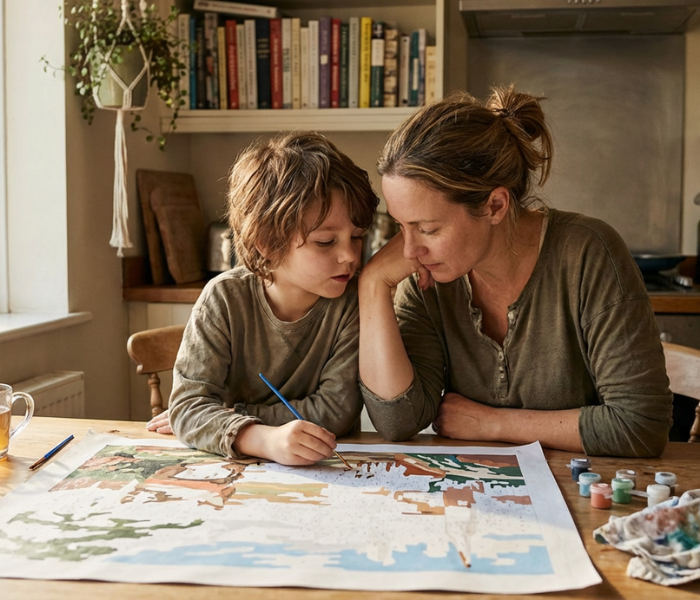
Beyond the Screen: Finding Focus in a Digital World
We’ve all seen it: kids glued to tablets, swiping through videos in a trance. Their minds race from one bright stimulus to the next, never pausing, never settling. This isn’t just screen time anymore. It’s training young brains to expect instant rewards and constant novelty.
Slow crafting offers something radically different. When children pick up a paintbrush and follow numbered patterns, they step out of that frenetic digital rhythm. The benefits of guided art for children go deeper than keeping hands busy. This structured approach to creativity works like a reset button for overstimulated minds.
Here’s what happens during a paint by numbers session:
- Attention spans naturally extend as kids focus on matching colors to numbers
- Decision fatigue drops because the structure removes overwhelming choices
- Breathing slows and heart rates settle during repetitive brushwork
- Achievement feels tangible when sections gradually reveal a complete image
Paint by numbers isn’t about creating the next Picasso. It’s about giving developing brains a chance to experience calm, focused engagement. In a world that constantly pulls children toward the next notification, the next video, the next swipe, this simple activity teaches them something precious: the satisfaction of staying present with one task until it’s done.
The Toolkit: Essential Supplies for a Frustration-Free Session
Having the right supplies transforms paint by numbers from a struggle into a satisfying experience. Let’s walk through what you actually need beyond the basic kit.
Your standard kit includes a pre-printed canvas with numbered sections, small pots of acrylic paint labeled to match those numbers, and a few brushes (typically one thin, one medium and one large). Some manufacturers take extra care with shipping. Davincified ship canvases in a safe tube to protect them from damage and ensure they arrive in perfect condition.
Protect your workspace with materials you likely have at home. Spread out newspaper, kraft paper, or an old tablecloth. A craft apron saves your clothes from permanent paint spots.
Keep your canvas steady using an easel or taping it to a sturdy board. A wobbling surface makes precision impossible, especially in detailed areas. Even a thick piece of cardboard works perfectly.
For tiny numbered sections, grab a magnifying glass or use your phone’s camera zoom. This simple tool prevents eye strain and helps you stay inside the lines on intricate designs.
Why This Method Works: The Science of ‘Flow State’
When children face a blank canvas, their minds often flood with possibilities and pressure. “What should I draw? What if it’s not good enough?” This overthinking triggers stress responses that block creativity. Paint by numbers removes this barrier entirely. The structure acts like training wheels, letting kids focus purely on the meditative process of painting.
This is where something remarkable happens in the brain. As children match numbers to colors and fill in sections, they enter what psychologists call a flow state. The repetitive, focused activity quiets mental chatter. Their breathing steadies. Shoulders relax. The nervous system shifts from “alert mode” to “calm mode” because the task has clear rules and achievable goals.
Here’s what else happens beneath the surface:
- Motor skills strengthen naturally as small brushes navigate tight spaces, teaching precision without drills or lectures
- Hand-eye coordination improves through the constant dance between what eyes see and what hands execute
- Patience grows organically since each completed section delivers a small win, building tolerance for working toward bigger goals
Unlike instant digital rewards that spike dopamine quickly, paint by numbers teaches children to work steadily and celebrate gradual progress. Each finished square becomes proof that effort pays off.
Setting the Scene: Preparing Your Canvas and Space
Getting your workspace ready makes all the difference between a relaxing paint-by-numbers session and a frustrating one. Think of this as building your creative nest where your child can truly focus.
Lighting matters more than you’d think. Position your painting station near a window for natural daylight, or invest in a good daylight bulb. Poor lighting forces eyes to work overtime, leading to headaches and color confusion. Your child shouldn’t have to squint to see the difference between sections marked 12 and 15.
For audio background, skip the television’s visual distraction. Gentle instrumental music or an engaging audiobook keeps minds occupied without pulling attention away from the canvas. Many families find nature sounds particularly soothing.
Chair height deserves attention too. Your child’s elbows should bend at roughly 90 degrees when painting. This prevents the hunched shoulders that lead to backaches after longer sessions.
Techniques to Help Little Hands Paint Like Pros
Getting kids comfortable with their paint by numbers set requires a few simple strategies that prevent common frustrations. Start by teaching the top-down, left-to-right painting rule, which means beginning at the upper corner and working across and down. This keeps little sleeves from dragging through wet sections they just completed.
Brush maintenance makes a huge difference in keeping colors vibrant. Show your child how to rinse their brush thoroughly in clean water every time they switch numbers. Swishing it around and gently wiping on a paper towel removes lingering pigment that would otherwise muddy the next color. Keep two water cups handy – one for the initial rinse, another for the final clean.
Acrylic paints can surprise kids used to thin school watercolors. The thicker consistency offers better coverage (brands like Davincified typically provide high-pigment density paints that cover in fewer coats), but sometimes feels stiff to young painters. If the acrylic paints feel too thick for your child to manipulate easily, mix in a drop of professional flow aid rather than water. This maintains the pigment binder strength while making the paint glide effortlessly. Regular water dilutes the adhesive properties, but flow aid keeps everything intact while improving workability.
Final Thoughts: Creating a Gallery of Memories
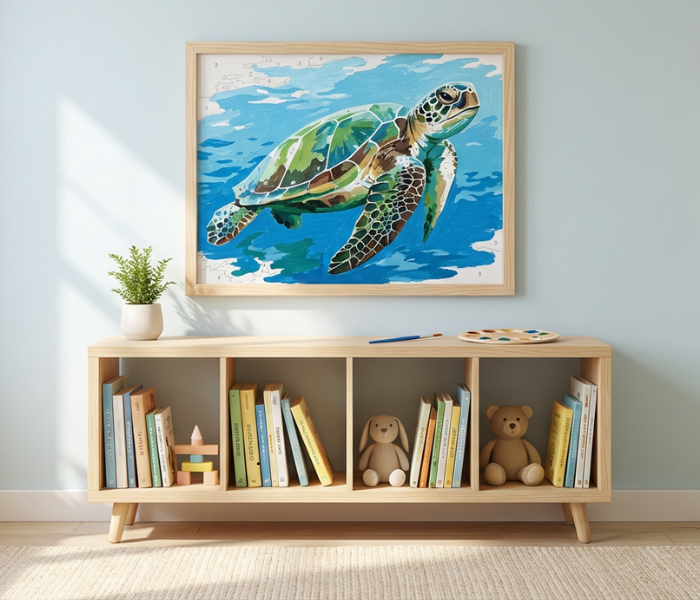
When your child completes their first paint by numbers project, make it official by putting it in a frame. Hang it on the wall where everyone can see it. This simple act tells your child that their work matters and that you’re genuinely proud of what they created. Real frames transform paintings into treasured keepsakes instead of artwork that gets folded into a drawer and forgotten.
The benefits reach far beyond a single afternoon. You’re building something bigger: a regular activity that pulls everyone away from screens and notifications. These quiet painting sessions become the moments your kids will remember years later. Not the expensive vacations or fancy gifts, but the times you sat together at the kitchen table, talking and laughing while filling in tiny numbered spaces.
Start your collection with beginner designs that feature large sections and basic colors. As confidence grows, move toward scenes with more detail. Working through increasingly challenging projects together creates a shared sense of accomplishment that strengthens your family bond. Each completed painting represents not just artistic growth, but hours spent side by side, creating something beautiful while simply enjoying each other’s company.