
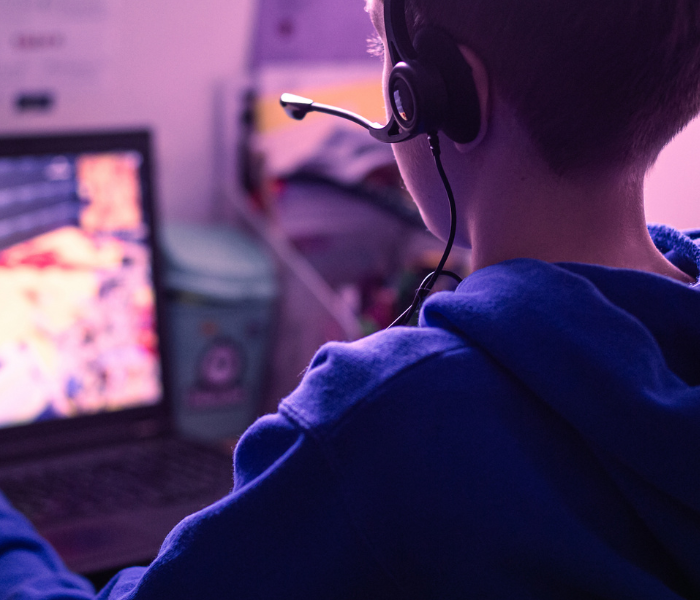
Hours on a console don’t automatically mean addiction. That’s worth saying first, because people throw the word around a lot, usually at teatime, through a closed bedroom door. Most children and teenagers who game a great deal are simply children and teenagers who like gaming.
The World Health Organization is clear on this. Its guidance on gaming disorder says the condition affects only a small proportion of people who game. So the useful question isn’t “how many hours?” It’s “what is the gaming doing to the rest of their life?”
What the doctors actually look for
The WHO’s definition, from its international classification of diseases (ICD-11), describes gaming disorder as a pattern of gaming marked by impaired control, with gaming taking increasing priority over other interests and daily activities, and continuing or escalating despite negative consequences. The pattern has to be severe enough to cause significant problems with functioning, and would normally have been evident for at least 12 months.
That 12-month point is reassuring. A summer of obsessive Minecraft, or a few weeks lost to a new release, is not a diagnosis. It’s a phase, and phases end.
The WHO suggests that anyone who games keep an eye on whether it starts crowding out other parts of the day: sleep, school, meals, friends, fresh air.
Signs it may be more than a hobby
The American Academy of Pediatrics (AAP), writing for parents on its HealthyChildren.org site (updated June 2025), lists signs of unhealthy gaming. They include a child who:
● Is preoccupied with gaming and becomes upset or anxious when it’s taken away
● Needs to play more and more, and can’t cut back or stop
● Has lost interest in things they used to enjoy
● Lies about how much time they spend playing
● Uses gaming to escape a bad mood
That last one is easy to miss and arguably the most important. A child who games for fun is having fun. A child who games because everything else feels too much may be telling you something about how they’re doing, and the console is just where it shows.
The AAP also mentions some risk factors, including gaming at the expense of homework, sleep, exercise or relationships, and existing difficulties such as anxiety, low mood or ADHD. It cites a six-year study in which around one in ten adolescents had symptoms of unhealthy gaming that worsened over time.
What tends to help at home
Most of the AAP’s suggestions are practical rather than dramatic. It recommends a family media plan that makes sure gaming isn’t squeezing out homework, exercise or sleep. Gaming in shared spaces, where possible, rather than behind a closed door, makes it less secretive. So does knowing which games and apps your child is actually using, and explaining that many games are built around ads, in-game purchases and data collection.
One suggestion surprises parents: play with them. Sitting down for a few rounds shows interest, helps you understand why the game is so absorbing, and makes it easier to agree on a sensible stopping point. Modelling matters too. The AAP gently notes that parents who struggle to put their own phones down may want help with that themselves.
Holidays can be a good reset. A trip, a week at the grandparents’ or a few days somewhere with patchy Wi-Fi often shows you quickly whether your child is a keen gamer who adapts happily or one who genuinely can’t settle without a screen. Either answer is useful information. Just don’t present it as a punishment or a detox. A trip sold as “time away from your Xbox” tends to start with a sulk and end with a standoff.
When it’s time to get outside help
If your child resists every effort to cut back, the AAP’s advice is to speak to your child’s doctor. In the UK that usually means your GP, who can talk through what’s going on and point you towards local support, including children’s mental health services if low mood or anxiety seems to be part of the picture.
For older teenagers and young adults, the picture can be harder, partly because parents have less say over how they spend their time. Help has broadened here in the last few years, and some specialist services now offer digital addiction support that works with the young person and the family together, rather than leaving parents to police the router on their own.
Whatever the route, it helps to go in with specifics: roughly how long they play, what has changed, what you’ve already tried, and what worries you most. “He plays too much” is hard to work with. “He’s stopped seeing his friends, and he’s not sleeping” is something a professional can act on.
If your child seems very low, talks about not wanting to be here, or you’re worried about their safety, contact your GP urgently or call 999 in an emergency. Young people in the UK can call Childline free on 0800 1111, and Samaritans are available on 116 123 for anyone, at any time.
The point isn’t the screen
Taking the console away rarely fixes a problem on its own, because the console was rarely the whole problem. The children who do best tend to be the ones whose parents got curious about why they were playing, not just how much.
Sources
● World Health Organization. Gaming disorder: frequently asked questions (ICD-11 classification FAQ; undated page). https://www.who.int/standards/classifications/frequently-asked-questions/gaming-disorder
● McCarthy, C. Unhealthy video gaming: signs and what parents can do. American Academy of Pediatrics, HealthyChildren.org (last updated 16 June 2025). https://www.healthychildren.org/english/family-life/media/pages/unhealthy-video-gaming.aspx
● Next Level Wellness & Behavioral Health. Homepage (client page; details as read October 2026). https://www.nextlevelwellnessbh.com/