
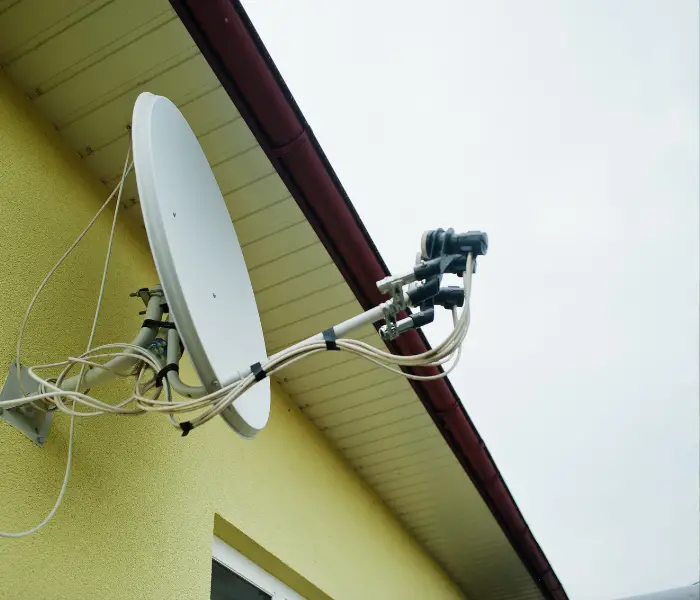
Aerial installations are essential for many households across the UK, ensuring access to digital television and radio services. However, the process of installing aerials is not without its challenges, especially when contrasting urban and rural settings.
These challenges range from signal reception to physical installation hurdles, each influenced by the area’s unique character. This article delves into the diverse issues faced during aerial installations in urban and rural UK areas, shedding light on the complexities of providing seamless digital connectivity across varied landscapes.
Urban Installation Challenges
Densely Built Environments
Urban areas in the UK, known for their high-density living and towering infrastructures, present unique challenges for aerial installations. The proximity of buildings can lead to signal reflection and refraction, leading to a phenomenon known as multipath interference. This can significantly degrade TV signal quality, causing picture break-up or complete loss of service.
Access and Safety Regulations
Safety and access regulations in urban settings are stringent. Aerial installers often face hurdles in obtaining permission to access rooftops on high-rise buildings. Additionally, adhering to health and safety standards to mitigate risks associated with working at heights adds another layer of complexity to urban aerial installations.
Signal Interference
Urban environments are bustling with electronic devices and machinery that can cause electromagnetic interference, affecting aerial signal reception. This issue is exacerbated by the prevalence of LTE (4G) and the emerging 5G networks, which are known to disrupt Freeview signals if proper filtering is not in place.
Rural Installation Challenges
Signal Attenuation
In rural parts of the UK, the distance from broadcast transmitters can significantly affect signal reception quality. Signal attenuation—the reduction in signal strength over distance—means that rural installations often require higher gain aerials or even masthead amplifiers to achieve an acceptable signal quality.
Topographical Obstacles
The natural landscape of rural areas can pose significant barriers to signal reception. Mountains, hills, and even dense foliage can obstruct line-of-sight to the nearest transmitter, necessitating innovative solutions like taller masts or alternative installation sites.
Limited Access to Services
Rural areas often experience difficulty accessing timely aerial installation services due to their remote locations. The limited number of service providers in such regions can lead to longer wait times for installations and repairs, affecting residents’ access to digital services.
Environmental Concerns
Weather Conditions
Urban and rural aerial installations are subject to the UK’s unpredictable weather conditions. High winds, heavy rain, and snow can delay installation projects and impact the durability and performance of the installed aerial equipment.
Sustainable Practices
As environmental awareness increases, there’s a growing demand for sustainable practices in aerial installations. This includes using durable materials that withstand the test of time and weather, reducing the environmental impact of frequent replacements.
Technological Adaptations
Advancements in Aerial Technology
Significant advancements in aerial technology have helped overcome a myriad of installation challenges. Innovations such as LTE filters, wideband aerials, and signal amplifiers have been developed to enhance signal reception in urban and rural settings.
Digital Switchover Effects
The UK’s transition from analogue to digital broadcasting (digital switchover) necessitated widespread aerial upgrades. Although the switchover has been completed, its legacy persists in the ongoing need for compatible aerial installations and the push towards improved digital connectivity across all regions.
The Role of Professional Installers
Ensuring Quality and Compliance
Professional aerial installers play a crucial role in navigating the installation challenges. Their expertise is vital in selecting appropriate aerial types, securing safe installation practices, and ensuring adherence to local regulations and standards.
Customised Solutions
Given the diversity of challenges across different areas, a one-size-fits-all approach is insufficient. Professional installers provide customised installation solutions that consider the specific requirements of each location, whether it’s a bustling city centre or a secluded rural village.
The Path Forward
The challenges of aerial installation in urban and rural UK areas are as diverse as the landscapes. As technology advances and the demand for quality digital services grows, the aerial installation industry must adapt and innovate. By developing specialised solutions that account for the unique challenges of each environment and by prioritising sustainability and efficiency, the sector can ensure that all UK residents, irrespective of location, have access to reliable and high-quality digital broadcasting.
In conclusion, while the challenges of aerial installation vary significantly between urban and rural settings, the commitment to overcoming these obstacles is a testament to the industry’s dedication to universal digital connectivity. As technology continues to evolve, so will the solutions to these ever-present challenges, paving the way for a more connected and digitally inclusive UK.