
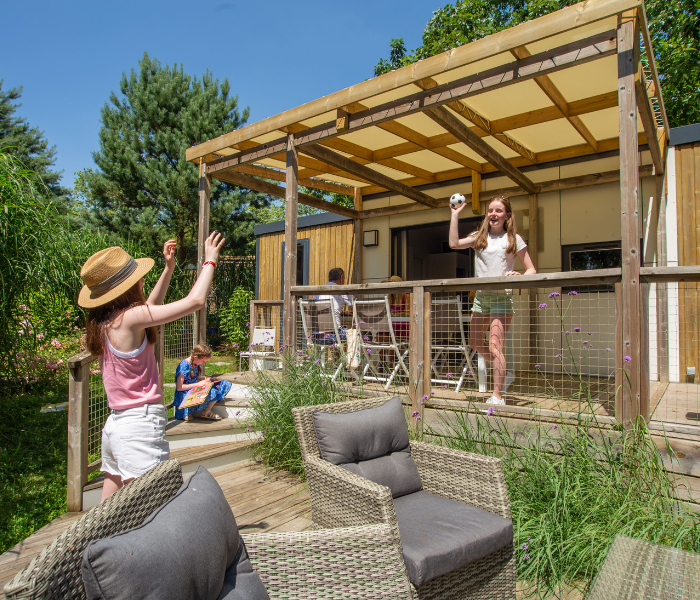
If your idea of a campsite is a muddy field, a shower block you’d rather not think about and a tuck shop selling flat lemonade, France is going to come as a very pleasant surprise. Camping is something the French take genuinely seriously, and the best sites over here feel closer to a small holiday village than anything most British families grew up with. Heated pools, proper restaurants, kids’ clubs that actually entertain the kids — it is a different world.
The catch is that “campsite” in France covers everything from a farmer’s paddock to a five-star estate, so knowing what you are booking makes all the difference. Here is what British families should know before committing to that first (or next) French camping holiday.
Not all French campsites are created equal
France uses an official star system for campsites, awarded by Atout France, the national tourism body. It runs from one to five stars and, unlike some hotel ratings, it genuinely means something: pitch sizes, facilities, staffing and services are all inspected.
If you want to skip the guesswork, it helps to look at curated collections rather than scrolling through thousands of anonymous listings. One worth knowing is Les Castels, a network of 13 independent four- and five-star estate campsites that has been going since 1959. Every site in the collection sits on a heritage estate — the grounds of a château, an old manor or a protected natural setting — and each one is still independently owned and run, which you can feel in the way the sites are looked after.
The idea of the estate campsite is quite specific: rather than rows of mobile homes on a purpose-built park, you are camping (or glamping) in the sort of grounds you would normally pay to visit. Think breakfast with an 18th-century château at the end of the lawn.
The accommodation is better than you think
You do not need to own a tent, and you certainly do not need to enjoy putting one up in the rain. Alongside traditional pitches for tents, caravans and motorhomes, sites like these offer mobile homes, chalets, furnished safari-style tents and some genuinely unusual lodgings. Some pitches even come with their own private bathroom, which for anyone who has queued for a shower with a toddler at 7 am is worth every penny.
For families, the practical wins are the same everywhere: an equipped kitchen, a terrace for the evening glass of something local, and enough space that the children are not sleeping on top of you.
What makes it work for kids
The best French sites are built around family life. Across the Les Castels collection, you will find free kids’ clubs, water parks and pools, play areas, and the kind of secure, enclosed estate
setting where slightly older children can roam to the boulangerie stand and back without you having a small heart attack.
A few ideas depending on where you are heading:
- Normandy — Château de Martragny is a four-star site in the grounds of an 18th-century château, a short drive from Bayeux and the D-Day landing beaches, which make a brilliant (and quietly moving) day out with school-age kids.
- Brittany — Les Ormes, Domaine & Resort sits on a 250-hectare estate between Saint-Malo and Mont-Saint-Michel, with an indoor pool for the days the Breton weather does its thing.
- The Vendée — La Garangeoire is a five-star site in the countryside just a few minutes from the Vendée coast, with a water park and an artificial lagoon that will keep the children happy for days.
Getting there: easier than flying with a family
For most British families, the joy of a French camping holiday is loading the car and going. From Folkestone, the Eurotunnel crossing takes around 35 minutes; ferries from Dover to Calais take about 90 minutes.
If you would rather not drive far on day one, Domaine de la Bien-Assise is a five-star estate campsite roughly seven miles from Calais port — close enough that you can be pitched, fed and poolside within the hour of rolling off the ferry. It also makes a sensible overnight stop if you are pushing further south the next morning.
Book early if you are tied to the school holidays. The best weeks at the most popular sites are reserved months in advance, often by returning families, so autumn and winter are the time to sort next summer.
Bringing the dog
Plenty of families will not go anywhere without the dog, and the good news is that most Les Castels sites accept pets, subject to conditions that vary by site and type of accommodation, so always check before booking.
The paperwork has changed since Brexit, though. The old GB-issued pet passports are no longer valid for travel to the EU. Instead, your dog needs an Animal Health Certificate (AHC) from a vet, issued within ten days of travel, plus a microchip and an up-to-date rabies vaccination. Factor in the vet appointment and the cost when planning, and remember the tapeworm treatment requirement for the return journey into Great Britain.
The bottom line
A French camping holiday is one of the few family breaks that genuinely works for everyone: the kids get pools, clubs and freedom; the adults get château views, local markets and a proper glass of wine on the terrace. Choose a four- or five-star estate campsite, book your peak weeks early, sort the dog’s paperwork in good time, and the hardest decision left is Normandy or the Vendée.