
We are currently in France and staying for a couple of months; we flew over, so we needed to hire a car once here. When I got quotes from the various car hire companies at the airport, the cheapest I could find was £850. I had heard that supermarkets in France hire out cars so I thought I would see the price difference and it’s a huge saving.
Where the airport hire companies advertise as approx £10-£15 a day for a small eco-car, the supermarkets say from €4 a day to hire a car in France.
If you aren’t fluent in French, it is a lot more difficult to get from the supermarkets but still doable, and I think the savings make it worthwhile. When I looked on my phone, I couldn’t get anywhere, but when I looked on a desktop computer, it automatically allowed me to translate the website from French to English.
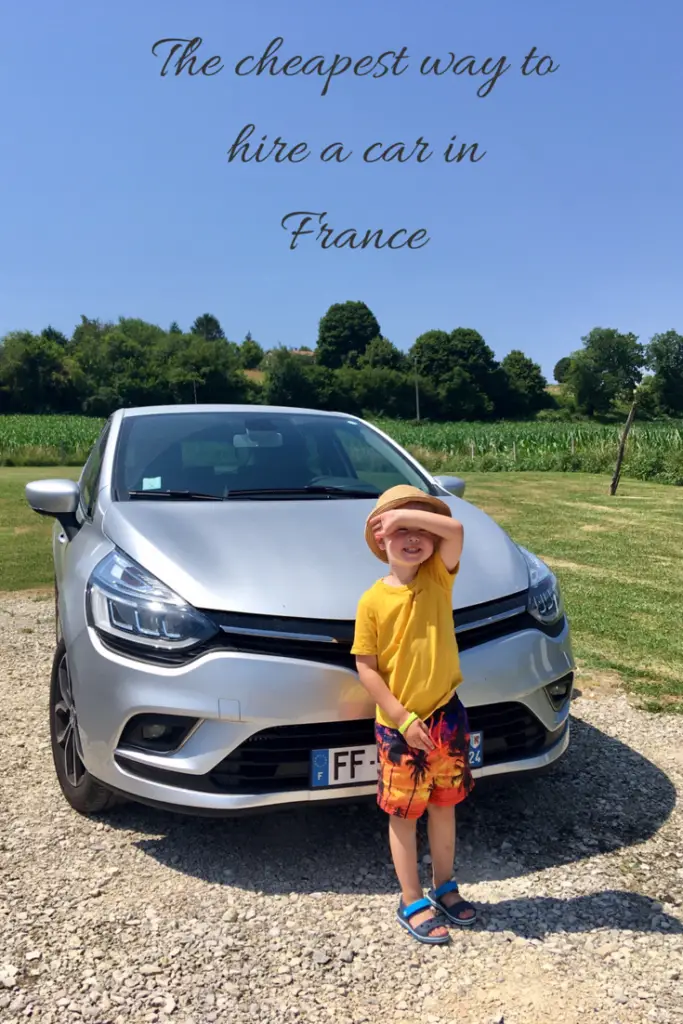
We flew into Bergerac airport, so I went with Leclerc, which is approximately 15 minutes drive from the airport. We have hired a Renault Clio, and it has cost us €150 to hire for four weeks, and we pay for the kilometres we use. I estimated what it would cost us for the full 53 days, and it would be about £450, which is a saving of £400 compared to the airport rentals, making it the cheapest French car hire for us!
The deposit is bigger that you have to give credit card details for as it’s €1200 rather than £300 that the airport companies tend to charge, but they give you information on how much will be charged for what damages etc. so that’s a bit more reassuring. They wouldn’t let me hire it for more than 30 days, though, even when I was in the office, so I’m going in to renew the contract after 30 days for the next 23 days.
I also hired a car seat for Lucas, which was €10 as opposed to around £50, which the airport hire companies charge. As well as Leclerc, there are other car rental places such as Super U and Carrefour to try depending on where you want to hire from.
Check the insurance small print before you sign
One of the easiest ways car hire stops being “cheap” is through insurance surprises, so it’s worth taking a few extra minutes to understand exactly what you’re covered for before driving away. Supermarket rentals often include basic cover, but excess amounts can be higher than you expect. Instead of automatically buying expensive add-ons at the desk, compare standalone excess insurance policies in advance, as they can work out much cheaper for longer stays. Take clear photos of the vehicle from every angle when you collect it and again when you return it, including wheels and interior, so there’s no confusion about existing damage. While it may seem excessive to think about accidents when you’re planning a French road trip, understanding how liability works abroad is important; even firms like New Mexico Accident Firm, LLC regularly highlight how misunderstandings about cover and responsibility can complicate matters when driving in unfamiliar places. A little preparation upfront helps keep your “cheap” hire genuinely budget-friendly from start to finish.
Driving in France
Now you know where to hire a car in France, knowing the road rules is important to ensure a safe and enjoyable trip.
Drive on the right side of the road
In France, drivers must keep to the right side of the road. This can be tricky for those used to driving on the left, but it’s important to stay alert and pay attention to road signs.
Follow the speed limit
The speed limit in France varies depending on the type of road you’re on, with a maximum of 130 km/h (80 mph), while on other roads, it can be as low as 20 km/h (12 mph). Be sure to check the signs and adjust your speed accordingly.
The national speed limit in France:
- Motorways: 130 km/h (80 mph)
- Dual Carriageways: 110 km/h (68 mph)
- Main Roads Outside Built-up Areas: 80 km/h (49 mph)
- Main Roads Within Built-up Areas: 50 km/h (31 mph)
Wear your seatbelt and check your car seats
It’s mandatory for all passengers to wear seatbelts in France.
Children who are younger than ten years old can’t ride on the front seats of vehicles unless there aren’t any rear seats, the rear seats are full of other children under ten years old, or there aren’t any seat belts in the back. If any of these cases occur, a child shouldn’t sit in the front seat with their back facing the road if the vehicle has an airbag for passengers unless that airbag has been turned off. Instead, the child needs to ride on a seat or restraint suitable for their size and meets safety standards.
A rear-facing baby seat is required for a baby weighing up to 13kg.
A child weighing 9 and 18kg needs to be placed in a child seat, while a child who weighs over 15kg and is under ten can use a booster seat with either a seat belt or a harness.
The driver has the duty to ensure that all passengers under 18 years old are properly restrained.
Don’t use your phone while driving
Using a mobile phone while driving is illegal in France, even using a hands-free device. If you need to make a call or send a message, pull over to the side of the road.
Don’t drink and drive
The legal blood alcohol limit in France is 0.5 g/l, which is lower than in some other countries. If you plan on having a drink, have a designated driver or use public transportation. Be aware that, especially in high tourist season, police will do random checks on drivers for alcohol and drugs.
Carry the right documents
When driving in France, you must always have your driver’s license, registration, and insurance documents with you. If you’re renting a car, ensure you have all the necessary paperwork before you hit the road.
Carry a driving kit
When driving in France, you must carry high viability vests for each passenger, a warning triangle and a first aid kit.
Exchanging money in France
To hire a car in France, you are going to need euros. If you are looking for the best way to exchange money whilst travelling, I recommend Wise.
Wise gives you a free debit card and has an app for you to track your money and transactions easily. You can even freeze your card on the app if needed. They use the real-time exchange rate as you’ll find on independent sources like Google, XE, and Yahoo Finance. (Their fees are as low as 0.35%.) You can hold and manage money in more than 50 currencies. This lets you avoid exchange rate movements and prepare for future transfers.
Wise is regulated by the FCA in the UK, FinCEN in the US, and many other regulators around the world. It means that they operate according to the rules they’ve made to protect consumers in each region. They safeguard your money in established financial institutions like JP Morgan Chase, Barclays, and Deutsche Bank. Safeguarding means that, by law, they have to keep all of your money in accounts that are completely separate from the ones they use to run their business. So, if anything were to happen to Wise, your money would be safe.
collaborative post