
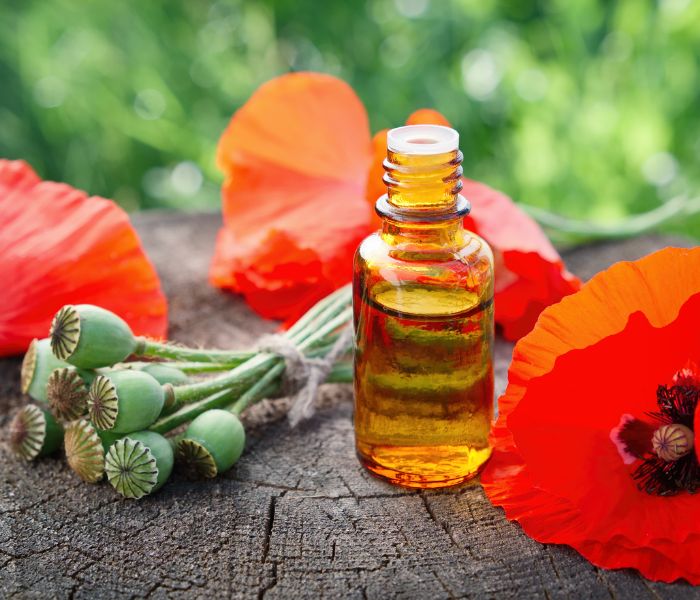
Poppyseed oil is one of the oldest oils in Europe, and it has now been rediscovered and become a rarity. It originated from the area around the Mediterranean Sea. There are two different species: white (from Asia) and blue (from Europe) poppyseed.
One thing that has been found is that poppyseed oil is high in antioxidants, particularly vitamin E. It is also high in a few fatty acids. These have a variety of benefits, but all help to improve the skin.
Linoleic acid is the most prevalent of these fatty acids. It is important because it is not naturally formed in the body, so it can be easy to be deficient. Linoleic acid helps to maintain the cell’s wall so water can be retained in the cells. This helps to prevent skin dehydration, which prevents dry, scaly skin.
Oleic acid is the second fatty acid found in poppyseed oil. Oleic acid can help the skin to absorb other compounds. It can also help the skin to heal faster by helping the skin to regenerate. This can also improve the skin’s elasticity and revitalise the skin.
Palmitic acid is the third fatty acid found in poppyseed oil. It is a very prominent compound found in the body and on the skin; however, its levels drop dramatically with age. Palmitic acid can benefit the skin by moisturising it and fighting the signs of ageing.
Poppyseed oil is very soothing and can help soothe dry, damaged, or chapped skin. It can also reduce skin inflammation. This means poppyseed oil could benefit those with inflammatory disorders such as eczema or psoriasis. Because of its soothing properties, poppyseed oil can be used by people with sensitive skin.