
Backyards now serve many of the same purposes as indoor living rooms, giving families a comfortable place to eat, talk, play and unwind. A thoughtful design can support weekday coffee breaks, children’s activities and relaxed weekend gatherings without making the garden feel crowded. The best spaces combine practical surfaces, comfortable furniture and greenery, creating an outdoor area that feels connected to daily life.
The Shift Toward Alfresco Living
More homeowners are planning their properties around outdoor rooms instead of treating the backyard as unused space. This evolution of outdoor living reflects a desire for flexible areas that can support meals, social time and quiet breaks.
Start by deciding how you’ll use the space most often. A dining table needs a stable surface and enough room for chairs to pull back, while a reading corner may only require two weather-resistant seats beside a planted border. Creating clear zones also helps a modest backyard feel organized. Plan around your regular household routine first, then consider occasional parties or larger family gatherings.
Seamless Transitions From Indoors
A strong connection between the house and backyard makes the outdoor area easier to use. Wide doors help, but smaller details can create a similar effect. Repeating flooring tones, furniture colors or natural materials on both sides of the doorway gives the spaces a clear visual relationship.
Practical indoor-outdoor design ideas include arranging furniture to preserve sight lines and using textiles that echo the colors inside. Keep the main route free from large planters and bulky seating, especially near doors. If the kitchen opens onto the patio, position the dining area close enough that carrying plates feels easy. A storage bench nearby can hold cushions, table linens and children’s garden toys.
Choosing Long-Lasting Hardscape Materials
Patios, paths and retaining walls form the working structure of an outdoor living room. Porcelain paving offers a clean finish and low water absorption, while natural stone develops character over time. Concrete pavers come in many sizes and can be replaced individually if one becomes damaged. Your choice should suit the property, local weather and expected foot traffic.
Check that paving has an appropriate slip rating for outdoor use and ask how the base will be prepared. Poor drainage or an inadequate sub-base can lead to movement, puddles and uneven edges. If the project includes major level changes, wall construction or a new patio, consulting a qualified landscaper can help turn the initial layout into a buildable plan.
When to Hire a Qualified Landscaper
Professional support makes sense when the work goes beyond planting and movable furniture. Excavation, drainage changes, retaining walls, and large paved areas all require careful measurements and suitable construction methods. If you’re considering turning your backyard into an oasis, a landscaper can help bring your ideas together while ensuring the space remains practical and functional. They can also spot potential conflicts, such as a planned seating area blocking an access route or directing rainwater toward the house.
Before requesting quotes, write a short brief that covers the intended uses, preferred materials, and approximate budget. Ask each contractor about groundwork, waste removal, project timing, and what the quote excludes. Photos of previous work can show finish quality, but references provide useful insight into reliability and communication. Confirm who will manage any specialist trades and how unexpected site problems will be handled.
Layered Lighting Sets the Evening Mood
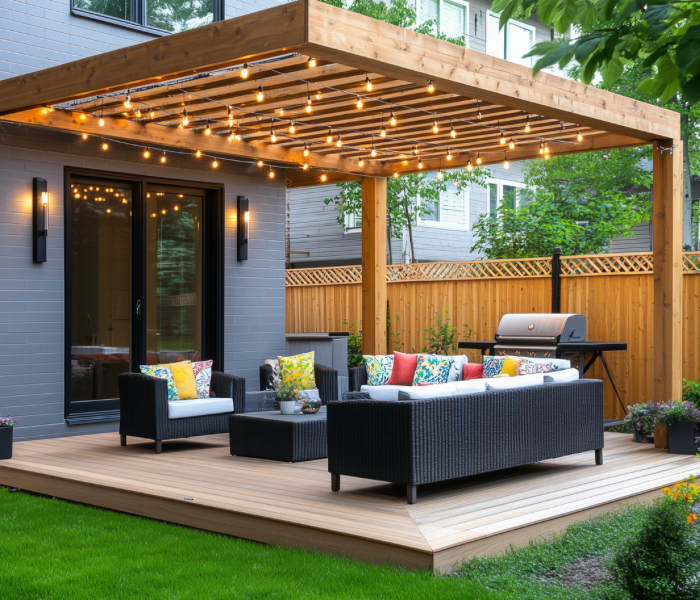
Outdoor lighting works best when several gentle sources share the job. Wall lights near doors provide useful visibility, low-level fixtures can mark steps, and portable lanterns bring warmth to a seating area. Avoid relying on one powerful floodlight, which can create glare and leave the rest of the backyard looking dark.
Choose fittings designed for their exact location and exposure to rain. Warm white light, usually around 2700K to 3000K, creates a relaxed atmosphere around dining and lounge furniture. Direct lights downward where possible and keep them away from neighboring windows. Timers and motion sensors can limit unnecessary use, while separate controls let you brighten a path without lighting the whole garden.
A backyard earns its place in daily life when it feels easy to step outside and settle in. Keep cushions close to the door, leave a clear route to the main seating area, and give every zone a simple purpose. Those small practical choices can turn an attractive garden into a space your household genuinely uses.
collaborative post