
As a parent, you need to teach your child about the world. And part of that process involves introducing them to specific board games. When they learn these, they have specific life skills they can bring with them for life that will never go away, no matter what situations they find themselves in.
Chess
Top of the list is chess, something that schools also prioritise. This game is highly educational because of the strategy involved. Players must somehow negotiate with the foreign army without getting all their pieces taken or being put in a checkmate position.
You play this game with two players on a checkerboard, aiming to checkmate the opponent’s king. As kids learn this game, they soon discover that they need to develop strategies and tactics, including allowing the other player to take their pieces if necessary to secure a better board position.
Go
Go is another game with a similar feel. Like chess, it requires spatial reasoning and long-term planning, with players placing black or white stones on a grid to capture territory.
The difficulty with Go is the sheer number of board configurations. There are billions of times more of them in Go than in chess, partly because of the number of pieces and also because of the larger board size.
The idea is to encircle as much space as possible, but it is easier said than done. Even the best Go players in the world still rely on general rules of thumb to choose their positions and moves.
Backgammon
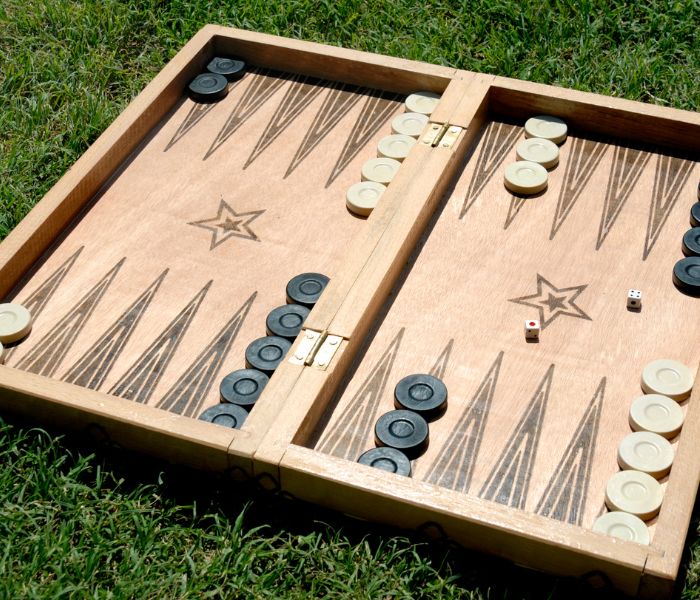
Backgammon is one of the oldest board games, but also among the most mysterious. Boards have strange patterns on them, and only a handful of people these days know how to play it.
The purpose of backgammon is to roll the dice and move pieces around the board, aiming to get them off before your opponent. Like many clever games, it combines elements of luck with strategy, forcing players to consider the best move but not rely on it to bring them to victory.
Many parents play backgammon with their children to teach them about adaptability and resilience. When things go wrong, it’s critical they understand why and how,
Backgammon sets can be expensive, but you can play the game online these days for free and for as many rounds as you want. The software simulates the randomness of dice rolls, making it fair for parents and kids.
Checkers
You should also teach your children checkers, especially if they are young. This game introduces them to the concept of board games and the idea of “taking” other pieces, setting them up for chess later.
Checkers isn’t quite as simple as you think it is, though. It turns out that there are millions of possible combinations you could choose from.
You play checkers by moving pieces diagonally across the board and jumping over the opponent’s pieces to capture them. Regular checkers can only move forward diagonally. However, when you get to the opposing player’s side, you can upgrade them to a king, which can move in any diagonal direction.
What’s nice about checkers is that it gives kids a simple game to play that helps them graduate to the more complex ones, like Go and chess. It teaches the rudiments of strategy and also exercises your mind as a parent, getting you to think logically about what to do next.
Scavenger Hunt
Switching gears slightly, scavenger hunts are another game you should teach your kids. These teach them to be observant and focus on solving problems.
You play this game by hiding objects around the garden and then getting kids to go out and find them. Many children love these games because they never know what they’re going to find.
Where possible, make the things they find fun. For example, you could give them treats or promise them trips to the cinema.
If you want more fun, you can:
- Add clues along the way, pointing kids to the prize
- Include a timer, telling kids they have to find the prize within the limit
- Make it themed by linking prizes to something that matters in your kids’ lives
Dominoes
Finally, you should teach your kids how to play a basic game of dominoes. This game teaches things like maths skills and matching numbers.
If you want, you can start with “draw” style dominoes for the first few games. However, after that, you’ll want to introduce your kids to the real thing.
So there you have it: some of the games parents should be teaching their kids.
Collaborative post