
Boutique hotel comfort comes from a careful mix of practical furniture, flattering light and thoughtful sensory details. You can recreate that feeling at home without redesigning every room or buying a matching furniture set. Start with the living room, where a few well-chosen changes can make everyday evenings feel calmer and more inviting.
The best results come from editing what you already own, improving comfort where it matters and giving each new addition a clear purpose.
Key Elements of Boutique Hospitality
Boutique interiors feel distinctive because each part of the room contributes to a consistent mood. Designers often repeat colours, materials or shapes to connect the furniture with the lighting and accessories. This approach gives a room character while keeping it visually settled.
Choose three words to describe how you want your living room to feel. You might settle on warm, restful and elegant, for example. Use those words to assess anything you plan to add. A glossy side table may look appealing in isolation, but it could feel out of place if the rest of your scheme features soft fabrics and aged timber.
Comfort also depends on how easily you can use the room. Place a small table within reach of each main seat and give reading chairs their own light source. Keep everyday controls, chargers and coasters in a shallow box or drawer so that surfaces remain calm. A tray on a coffee table can organise a candle, a small vase and the book you’re currently reading.
Boutique spaces also benefit from a memorable focal point. Distinctive hotel design often draws on local character, artwork or custom details. At home, this could be a large framed print, an inherited cabinet or a sculptural lamp. Give that feature enough space to be noticed instead of surrounding it with several competing objects.
If you’re working with limited floor space, these apartment living room ideas can help you balance personality with practical furniture placement.
Anchor the Room with Classic Materials
Begin with the largest pieces because they set the visual tone and affect how comfortably the room functions. Upholstery, timber, stone and metal all age differently, so aim for a considered mix instead of repeating one finish across every surface.
A leather sofa can provide a strong visual anchor, particularly when paired with softer elements such as a wool rug, linen curtains and cushions in brushed cotton. Before deciding on size, mark the sofa’s footprint on the floor with masking tape. Leave roughly 75 to 90 centimetres along the main walkway where space permits, then check that doors, drawers and side tables remain easy to use.
Durability matters as much as appearance. Timber side tables tend to handle daily use well, while a stone or ceramic-topped table can introduce the polished finish associated with hotel lounges. Repeat each key material once elsewhere in the room. A brass lamp might echo the frame of a mirror, while an oak table could connect with a wooden picture frame. Repetition makes the scheme look deliberate without requiring perfectly matched items.
Scale deserves close attention too. Guidance on boutique hotel furniture highlights the importance of balancing appearance, comfort and function. At home, a deep sofa needs a coffee table with enough visual weight to sit beside it. Slim chairs and raised furniture work better in compact rooms because visible floor space helps the layout feel open.
Finish by removing one or two small pieces that add clutter but little comfort. A clear route through the room feels more luxurious than an extra occasional table squeezed beside the door.
Master Layered Ambient Lighting
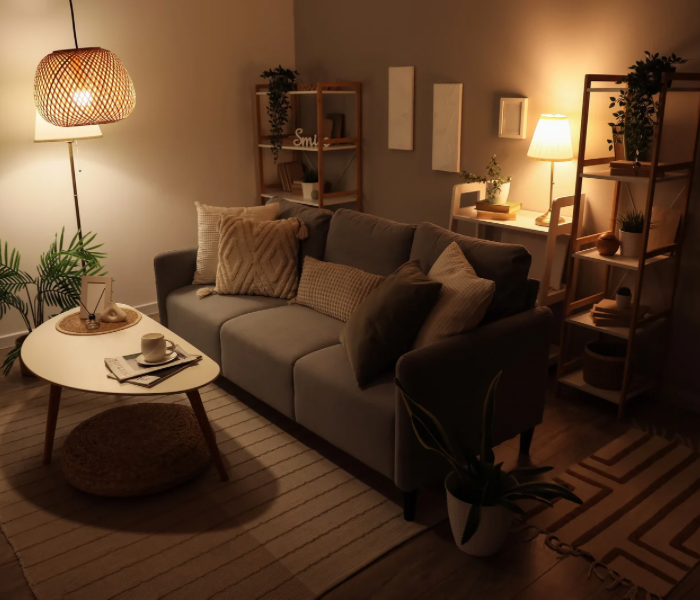
A single ceiling light rarely creates the relaxed atmosphere found in a well-designed hotel. Build a flexible scheme from three layers: general light for moving around, task light for reading and soft accent light for atmosphere.
Start by noting the room’s darker corners after sunset. A floor lamp beside the sofa can brighten one of these areas, while a table lamp on a console adds depth at a lower level. If you read in your favourite chair, position the shade near shoulder height so that light falls onto the page without shining directly into your eyes.
Choose bulbs with compatible colour temperatures. Warm white light at about 2,700 kelvin usually suits living rooms because it complements timber, cream fabrics and warm paint colours. Mixing a cool white ceiling bulb with warm table lamps can make the room feel disjointed, so check the kelvin rating on the packaging when replacing bulbs.
Dimmers provide useful flexibility where fittings allow them. Brighter light supports cleaning and family activities, while lower light creates a restful setting in the evening. Plug-in lamps with built-in dimmers offer a simple option for rented homes.
Use accent lighting sparingly to draw attention to one or two features. A small lamp can illuminate a shelf, while a picture light can give artwork a stronger presence. Mirrors placed near lamps help carry the glow across the room, although the bulb should stay out of direct reflection when you’re seated.
Remember the practical details as well. Hide trailing cables behind furniture where possible and avoid placing floor lamps across walking routes. The aim is a room that feels softly lit and remains comfortable to move through.
Incorporate Signature Scents and Textiles
Texture adds the final layer of comfort. Hotels use curtains, rugs, cushions and throws to soften sound as well as introduce colour. You can follow the same idea by combining a few tactile materials with a controlled palette.
Start at floor level. A rug should be large enough to connect the seating area, ideally sitting beneath the front legs of the sofa and nearby chairs. In a compact room, this creates one clear zone and can make the layout appear wider. Choose a low-pile design for busy family spaces or a thicker weave for a quieter sitting room.
Dress the sofa with an odd number of cushions in two or three textures. Velvet, woven cotton and boucle can work together when their colours share a common undertone. Keep enough clear seating space for people to sit down without moving a pile of accessories first. Fold one throw over the arm or place it in a basket nearby for colder evenings.
Curtains look more generous when they reach the floor and extend beyond the edges of the window. This arrangement exposes more glass when the curtains are open, which can help the room feel brighter. Advice on achieving a boutique hotel look also shows how fabrics, lighting and decorative details can work together as one scheme.
Scent should stay subtle. Pick one fragrance family, such as cedar, fig or clean cotton, then use a diffuser or scented candle as the main source. Avoid combining several strong fragrances in one room. If anyone in your household is sensitive to fragrance, fresh flowers, regular ventilation and freshly laundered textiles can provide a clean atmosphere without added scent.
Give the room a final reset before you finish. Plump the cushions, clear the main surfaces, and switch on the lamps you’ll use most often. That small routine reveals whether every detail supports comfort, which is the quality that makes a boutique-inspired living space feel special long after the decorating is done.
collabirative post