
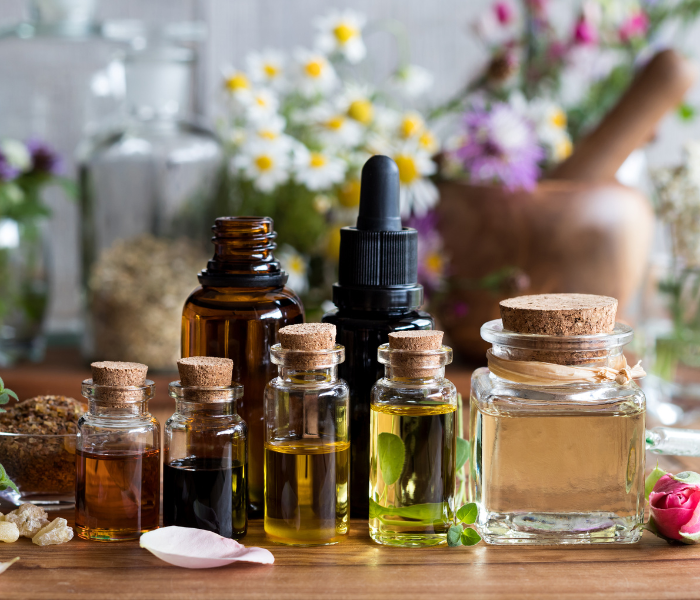
Avoiding scented products like aromatherapy oils might seem obvious for people sensitive to pollen, animal dander, or artificial ingredients like scents and perfumes. But essential oils are often recommended as natural remedies for allergies. How can the same product be helpful for allergy relief and harmful to those with sensitivities?
Allergies to perfume, scents, and aromatherapy essential oils
Although some people are sensitive to all perfumes and scents, it’s more common for people to react to only some scented products. It isn’t always easy to identify which perfumes, colognes, shampoos or scented candles they may react to, though – it will often depend on the individual’s sensitivity to certain ingredients or chemicals.
It’s common to react with allergy symptoms to perfume, aftershave, soaps, scented air fresheners – and even to certain aromatherapy products – but not other essential oils.
Purity of aromatherapy essential oils
What makes some aromatherapy oils different from the rest on this list? It’s mostly a question of purity. Some essential oils contain the same synthetic chemicals as perfumes and other scents, but the pure ones, intended for therapeutic use, do not contain additives. As a result, they are usually safe, even for people with allergies and chemical sensitivities.
Unfortunately, the labelling of aromatherapy essential oils can be very misleading. Even those which are produced at high temperatures (damaging the natural healing properties of the oils) or that have additives may be labelled as “100% pure” or “therapeutic grade” since these terms are completely unregulated. Determining the quality of essential oils can be very difficult, which is the biggest problem for allergy sufferers.
Aromatherapy as a natural allergy treatment
Although impure or “adulterated” essential oils can cause sensitivity reactions and symptoms, real therapeutic-grade oils can treat allergies. Oils like peppermint, lavender, tea tree, eucalyptus, oregano and basil have been used for centuries for respiratory symptoms, runny nose, headaches, dizziness, and other allergy symptoms.
To relieve common allergy symptoms, a drop of oil can be rubbed onto the palms of both hands and then cupped over the nose and mouth and inhaled for 60 seconds or more.
Aromatherapy may prevent allergies.
In some cases, according to naturopaths, it’s also possible to prevent allergies using essential oils. Sensitivities are heightened by the accumulation of toxins in the body, so gentle cleansing using essential oils (or other cleansing supplements) can help to reduce the toxic load in the body and lower the intensity and incidence of allergy reactions.
However, this approach totally depends on the quality of aromatherapy essential oils. Perfume-grade oils will actually worsen allergy symptoms, so it’s especially important to use the best essential oils for cleansing.