
Long-haul travel can leave your body tired and your mind unusually alert, even once you’re safely through the front door. Time zone changes, disrupted sleep, and hours spent sitting all affect how quickly you feel settled again. A simple post-travel routine can ease that transition without turning your first evening home into another task list. Focus on comfort, gentle movement and familiar habits that signal the travelling part of your day has finished.
Overcoming the Toll of Long-Haul Travel
After several hours in transit, dehydration, stiffness and changes to your usual meal times can make fatigue feel worse. Start with water and a light meal containing familiar foods, then spend five to ten minutes walking around your home or stretching gently. The aim is to loosen tight muscles without doing an energetic workout close to bedtime.
These practical long-haul flight tips also recommend allowing time to settle after arrival. If you’ve crossed time zones, try to follow local meal and sleep times from your first day. Daylight can help reset your body clock, so open the curtains or take a brief walk outdoors if you arrive during the day.
Create a Dedicated Unwinding Station
Choose one comfortable area where you can sit down as soon as the essentials are sorted. Keep a soft throw, a reading lamp, a coaster and a phone charger nearby. This saves you from searching through bags when your energy is low and helps the room feel welcoming after days or weeks away.
Comfortable seating matters here. Footstools can complement a sofa or chair whilst giving you somewhere to rest your legs, and storage ottomans can also hold blankets or magazines. Leave unpacking until you’ve eaten and rested unless you need something immediately. Putting dirty clothes in one basket and toiletries in the bathroom is enough progress for the first evening.
Support Your Posture and Elevate Tired Feet
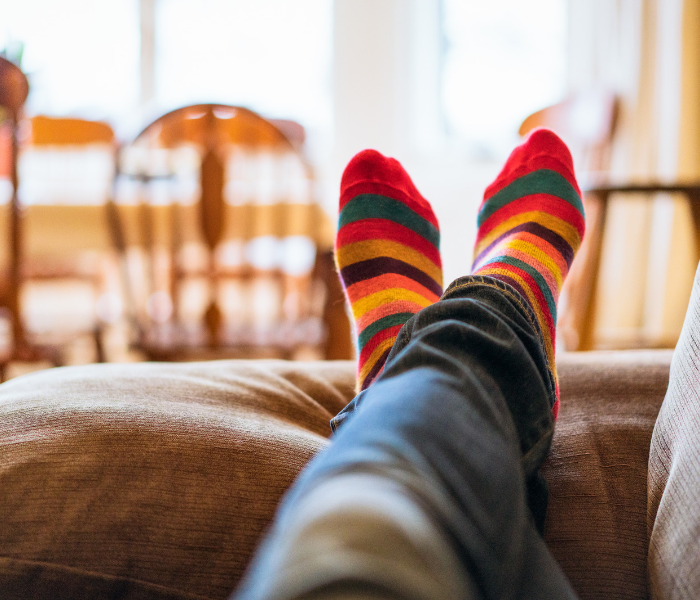
Hours in a fixed position can leave your hips, lower back and shoulders feeling tense. Sit with your back supported, place both feet on a stable surface and avoid curling up in an awkward position for the entire evening. A cushion behind your lower back may feel helpful if your sofa is particularly deep.
Elevating tired feet can feel soothing after a lengthy trip. Keep your ankles supported and change position regularly, especially if you’re watching a film or catching up with family. The advice on recovering after a flight includes hydration and light movement, which are easy to combine with a quiet evening. Seek medical advice promptly if swelling is severe, affects one leg or comes with pain, breathlessness or chest discomfort.
Embrace Slower Evenings at Home
Your first night home works best with fewer decisions. As bedtime approaches, dim bright lights, put travel notifications on silent, and choose a familiar activity such as reading, taking a warm shower, or watching one short programme. Caffeine late in the day may delay sleep further, so switch to water or a caffeine-free drink.
If a long trip has marked the end of a major chapter, the adjustment may take more than one evening. These thoughts on settling down after long-term travel explore the emotional side of returning and rebuilding a home routine.
Lay out clean clothes for the morning, close the suitcase, and let your first evening end quietly. The laundry will still be there tomorrow, but a calm night gives you a much better place to start.
collaborative post