
For many of us, the weather is finally starting to turn nice again (despite the odd gale or shower here and there), and plenty of people are looking forward to getting back out in the sun to soak up some of the essential vitamin D. Outdoor dining is a great way to do just that, but it takes a lot more that just a little outdoor space to make it a feasible, accessible, and inviting option for your home. Here, we’re going to look into what makes the type of dining space that you’re actually likely to use.
Choose The Best Location For It
First and foremost, you need to think about which location in your garden is best suited to your dining needs. If you don’t have a lot of space, your options might be limited, but in general, you want to make sure it’s close enough to your kitchen for convenience, so you can easily carry food, drinks, and utensils back and forth. You should also consider natural elements like sunlight and wind direction, choosing a wall that provides shelter while still allowing you to enjoy being outdoors without being too shaded. Making sure that your dining space is on stable ground is vital for safety and comfort, too, but the next tip can help with that.
Creating A Suitable Space
Once you have the right location, you’re going to want a solid, well-designed surface that’s suitable for the people and furniture that will populate it. Installing a patio or decking creates the stable, level foundation that you need. There are all kinds of material options, such as natural stone, concrete slabs, and treated wood, each providing the durability and visual appeal you need, with its own advantages. You might want to choose a space that complements the home’s style, but the priorities should be how easy it is to maintain and its resistance to changing weather conditions over time.
Invest In Comfortable, Durable Furniture
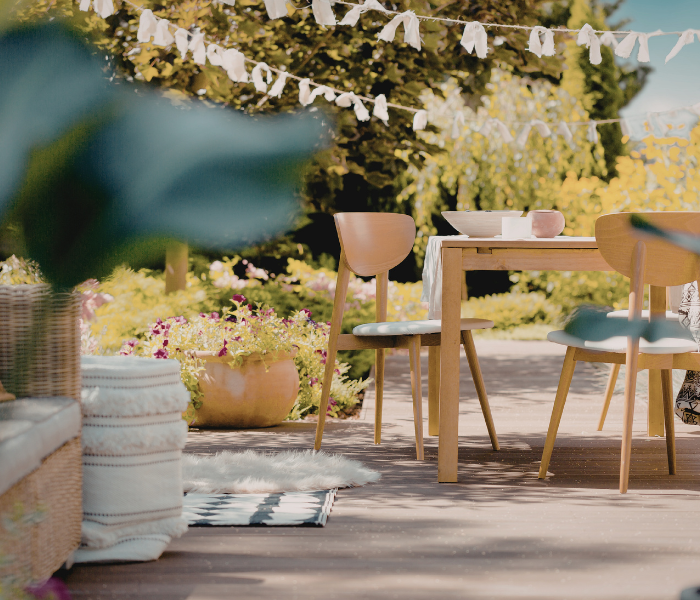
When you have the decking or patio you need, from there it’s all about choosing the right furniture. With outdoor dining, it’s important that you choose the right balance between comfort and durability. At a minimum, the furniture should be well-suited to being outdoors and tolerating natural weather changes, so garden centre furniture tends to be your best bet. Aside from being weather-resistant and long-lasting, it needs to be purpose-fit, so choose chairs that are supportive and can be paired with cushions made from weather-resistant fabrics, and consider what kind of group size you want to accommodate so that you can choose a table size that fits. Stackable and foldable furniture can also be very helpful if you want a more versatile space that can adapt to changing needs throughout the year.
Plan For Easy Access And Flow
Dining can typically involve a lot of going back and forth, whether it’s plating, serving food, grabbing drinks and utensils, or otherwise. As such, you want the space to allow for smooth movement and ease of access. This means you need to make sure that there’s enough space around the table for people to be able to move their chairs and walk without having to worry about bumping into everything else. Position your table so that there’s a clear, easy, and unobstructed pathway between it and the kitchen door to make serving food and drinks easier. Installing patio doors that allow for wide openings can make the transition a lot safer, too.
Add Some Practical Spaces
When you’re serving food, dining, or entertaining guests, your table is likely to be in use, already, so you want ot make sure that you have some additional surfaces and storage that can keep the space functional. For instance, you can set up a side table, outdoor cabinet, or some shelving attached to surrounding fences or walls that provide convenient spots for a little outdoor food prep or storing the supplies you need, such as drinks and extra utensils. This can keep everything within reach so that you don’t have to make as many trips inside. Weatherproof boxes and benches with storage spaces under the seat can be great for keeping your cushion and tableware when not in use, as well.
Incorporate Shade And Shelter
Even in the spring and summer, you never quite know what the weather is going to do. You don’t have to live in fear of a little dizzle, however, or worry about direct sunlight making your guests uncomfortable as they eat. Installing a retractable awning on the side of your home or options like umbrellas, pergolas, or gazebos can offer the protection from the elements you need, while also adding a little visual depth and interest to the space. Adjustable shade solutions tend to be the best, as they can allow you to suit the space to the changing conditions of the day. The shelter also protects your furniture and dining setup, extending its own lifespan.
Add Lighting For Comfort And Ambience
Good lighting is a must for any dining space. While natural light during the day might be perfect, if you want to have dinner out there or entertain guests with snacks and drinks, you might find that evenings get a little dark for your tastes. Layering different types of lighting not only makes sure that everyone can see their food and the people they’re with, but it can also create a warm, inviting glow to the space, nailing just the right atmosphere. If your outdoor dining space has any steps or boundaries that could become a tripping hazard, then exterior lighting is an essential safety investment, as well. By thoughtfully incorporating lighting, you can transform your outdoor space into a welcoming setting that feels just as comfortable and usable at night as it does during the day.
It’s important to make sure that you give your dining space and the furniture there the maintenance, love, and care to remain usable year after year. The tips above can help you get started in the right direction, but it’s worth investing in to keep it up to standard.
collaborative post