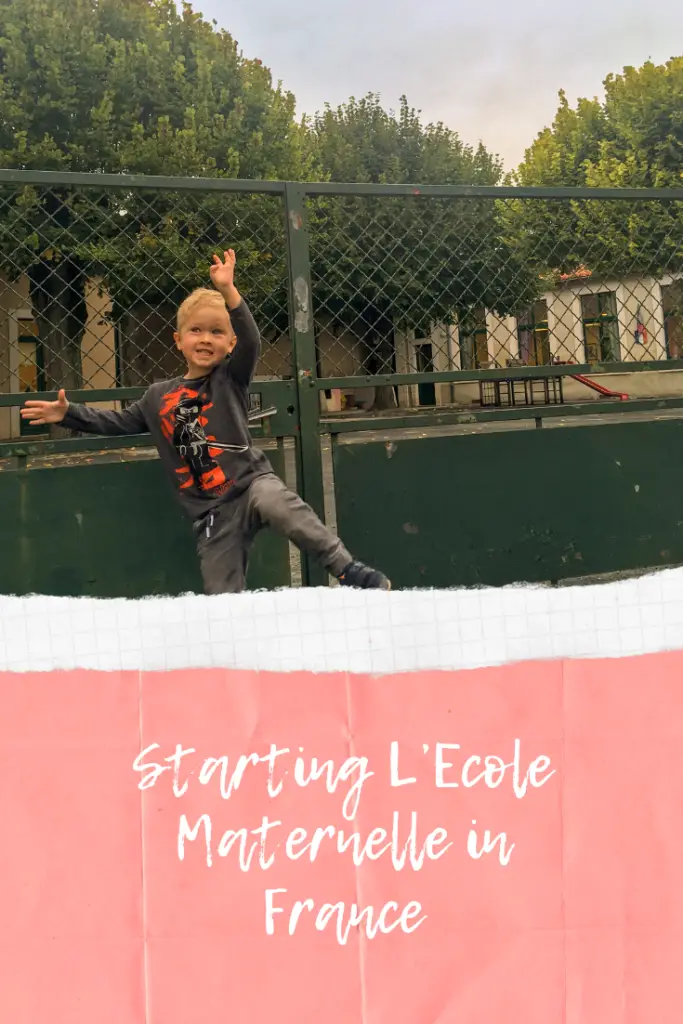
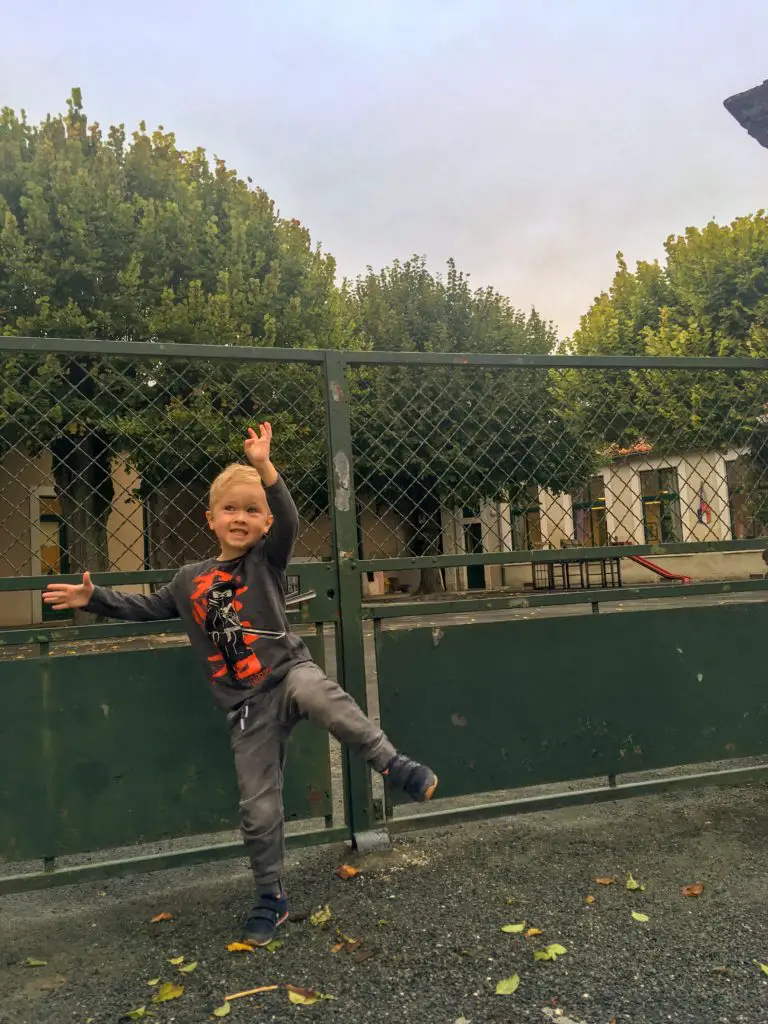
Lucas was due to start reception class in the UK last month, but as we moved to France, he has another nursery year.
In the French education system, children start L’Ecole Maternelle at the age of 3, where they go into the Petite Section for age 3-4 years, the Moyenne Section for 4-5 years and the Grande Section for 5-6 years. As Lucas is 4, he is in the Moyenne Section and will be in L’Ecole Maternelle for 2 years before moving up to primary school. From what I understand, the Petite and Moyenne sections are like a UK nursery or preschool, and the Grande Section is more like the UK reception class.
L’Ecole Maternelle is designed to introduce children to the school’s social environment and develop basic coordination skills. The main aim is oral expression and communication. Self-awareness is encouraged as well as group activities. These include arts and crafts, music and games. In the Grande Section, reading, writing and arithmetic are taught to prepare for moving to primary.
I’m glad that we have started Lucas at this age because he should be fluent in speaking French before they all start learning to read and write together. Considering the language barrier and that he has only been in L’Ecole Maternelle for 3 weeks, he has settled in well. He happily plays with people when we pick him up and enthusiastically walks in every morning.
How do you start L’Ecole Maternelle?
You must visit the Mairie (town hall) to get into France’s school system. The Maire is the mayor of the village, town or city. The Maire will deal with anything important in the area, whether registering a birth, asking about planning permission, opening a business in the village or school enrolment.
What do you need to start L’Ecole Maternelle?
I’m not sure if these vary from school to school, but rather than buying a pencil case, stationery and a water bottle to get ready for school, we were presented with a list that included slippers, insurance, a box of tissues and a ring binder!
There’s no school uniform in France so children can wear what they would like and we had to take in a spare set of clothes to keep at school.
Once they walk into school, all the children take their shoes off and put on either pumps/plimsolls or slippers for whilst they are indoors. They will change back for playtime outside and then into slippers indoors.
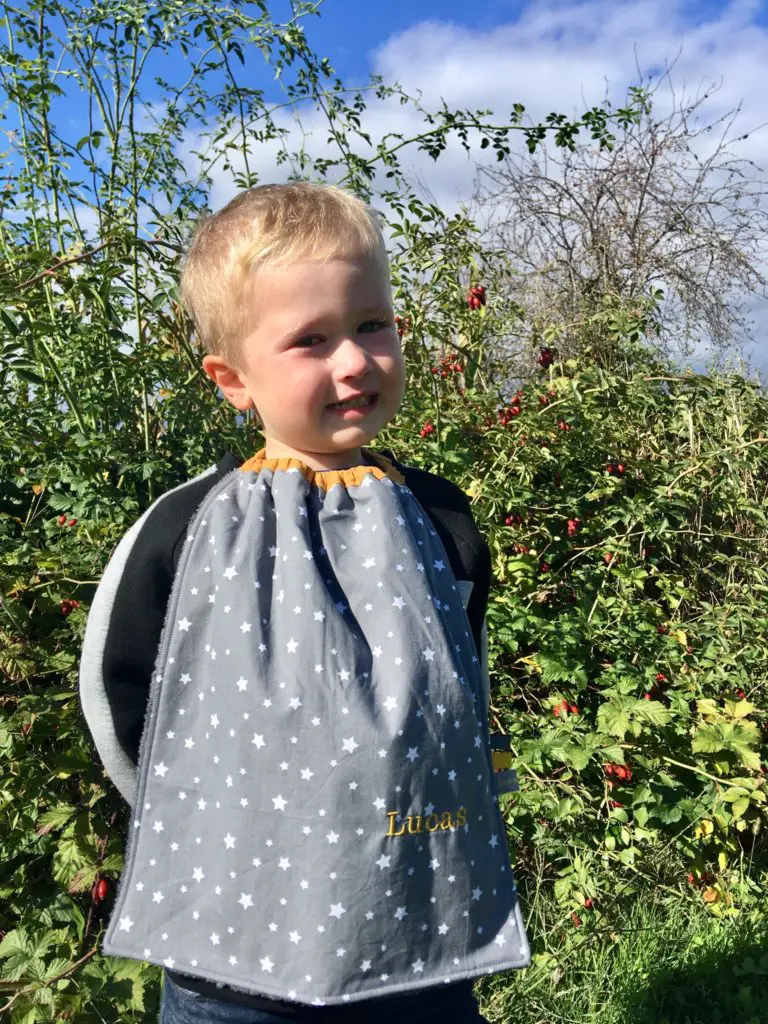
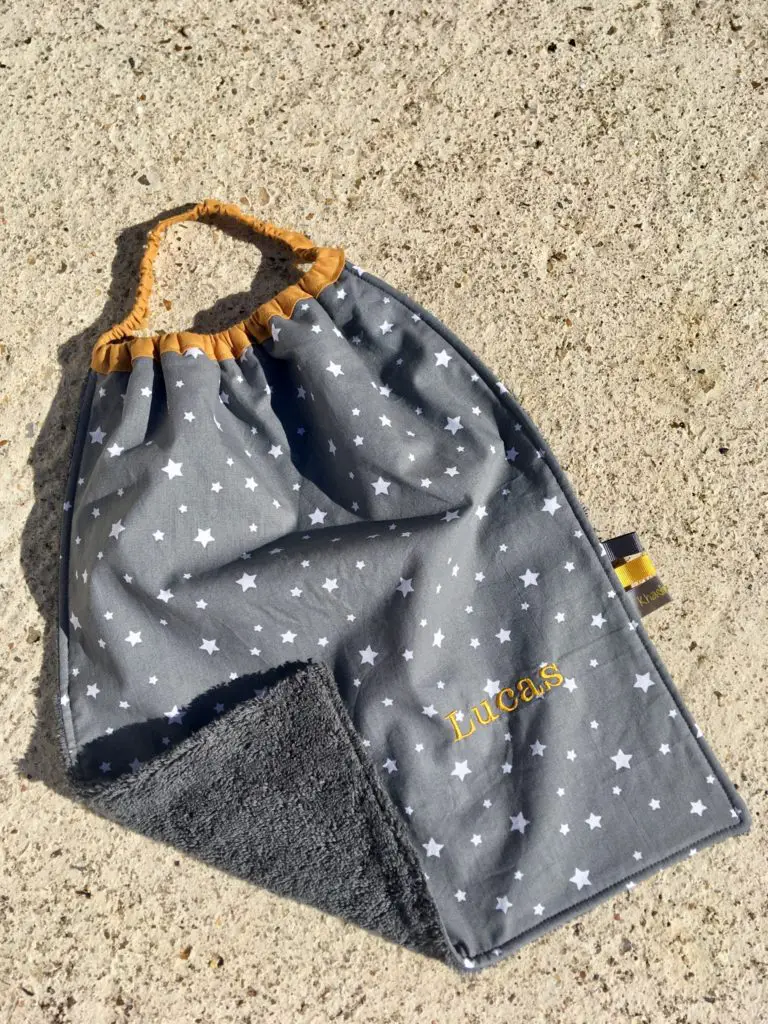
They also wear bibs for eating or napkin with a rubber band, as google translate told me. This was a bit of a shock for Lucas as it’s been a long time since he’s had to wear a bib in the UK. It’s also hard to find one that fits as they tend to be made for babies. However, I remembered that we have used a toddler bib for crafts in the past from KhadineDECO (use the code LUCAS15 for a 15% discount). Khadine creates everything herself in her workshop by hand. All the materials are carefully sourced and of high quality. You can see that the items are made with care and meticulous attention to detail. There are a variety of patterns to choose from, and they are all backed with towelling. You can also personalise them, which is perfect when they attend school. The elasticated neck is covered in coordinating material, making it more comfortable than raw elastic. They are made from baby size to adult size. I am impressed with the quality and can’t recommend Khadine highly enough.
Insurance! It never entered mine or D’s head that we would need insurance (assurance scolaire), but you do. The insurance covers breakages at school such as a football going through the window, school trips, extracurricular sports and injuries caused at school. There are various companies and different types of cover. We went with the insurance company, La Mae, the first year but have a look around as there will probably be different offers at different times with the companies. The last company we went with, which was cheaper, was Heysur, use the referral code JEGR9327 for a month free.
Vaccination record, the school asked us for proof of the Tetanus vaccine. We sent in Lucas’ red book that has his full record of vaccinations and they copied over what they needed to their forms.
What to expect at L’Ecole Maternelle
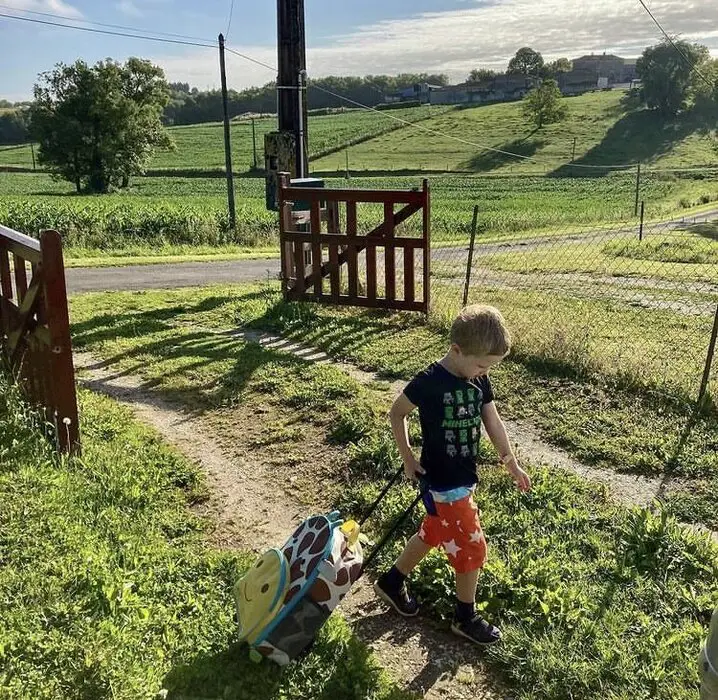
Lucas’ day begins at 9 am, but they like students to get there from 8.50 am. Many of the children will arrive on a school bus. It is normal for children, even as young as 3, to get on the bus. Due to this, most children are pulling along children’s suitcases rather than school bags.
Lucas has lunch from 12-1.10, and it’s not just a small meal. The French love lunchtime. It isn’t just a quick sandwich, play, or back to work. Lucas is having 3-4 course lunches every day. When I researched this, many sites said they cost, on average €3-4, Lucas’ costs us €2.30, which I think is amazing value. However, you can’t pay with cash or on your card, so you need a French bank account to pay with a cheque.
In the afternoon, they have a nap. I’m not sure what time or how long, but Lucas has got back into this habit quite easily, as he hasn’t napped since being 2. Lucas said they pull out camp beds and have a blanket over them. They can take in a teddy and cushion if they like.
Lucas’ school day finishes at 4.10 pm, but he has every Wednesday off. When he goes to primary school, he will have Wednesday afternoon off, but the other school days will be longer.
Do children legally have to start school at 3 in France?
Yes. Since the school year 2019/2020, it became compulsory for all children in France to go to school between the ages of 3 and 16 years old.
Giveaway
KhadineDECO has offered one reader the chance to win a dark grey star children’s bib. Whether you are like us and need it for school or for crafts and baking, use the app below to enter.
KhadineDECO